1–2 Week Honeymoon Boost: Selective Visibility Dating SwingersUK
1–2 Week Honeymoon Boost: Selective Visibility Dating SwingersUK
Selective visibility dating means deliberately controlling which users can see your profile through app privacy settings, incognito modes, or algorithmic signals, rather than staying broadcast to everyone. It works well when you want fewer, higher-intent matches or need discretion; it works against you when you’re new to an app and need the algorithm’s early exposure boost to build momentum. The right call depends entirely on whether you’re optimizing for volume or for control.
TL;DR:
- Incognito modes mainly hide your profile from discovery feeds but reveal it to liked or messaged users, making them unsuitable for total invisibility.
- Browsing privacy features like snooze or pause typically remove your profile from all visibility and are free, while incognito options often require paid upgrades.
- Your ranking heavily relies on recent activity, verified status, and engagement quality, so staying active during the first two weeks maximizes exposure.
- Paid boosts provide a short-term placement increase but do not guarantee better matches, especially for weak profiles, and should be tested with proper timing.
- Optimal privacy management involves routine verification, timing visibility around peak activity hours, and tracking engagement metrics over at least a week before making conclusions.
Table of Contents
- What Is Selective Visibility Dating? Myths vs. Truths
- How Dating-App Algorithms Influence Visibility
- Incognito, Snooze, and Hidden Profiles: What Each One Actually Does
- Paid Visibility Boosts: What You’re Actually Buying
- Your Step-by-Step Plan for Managing Visibility
- How to Tell If Selective Visibility Is Actually Working
- How SwingersUK Approaches Verification and Selective Discovery
- Legal Considerations and Data Protection for Your Dating Profile
- Selective Visibility Features Across Major Dating Apps
- The Psychological Effect of Controlling Your Own Visibility
- How to Evaluate Whether Your Settings Are Actually Effective
- Typical Costs and Timelines You Should Expect
- Testing Selective Visibility Before You Trust It
- Where SwingersUK Fits Into Your Privacy Strategy
- Sources
What Is Selective Visibility Dating? Myths vs. Truths
Most daters treat visibility settings like a light switch: on means everyone sees you, off means you vanish. That’s not how any major platform actually works, and the confusion leads people to either overuse privacy tools or ignore them out of fear they’ll “disappear” from matching entirely.
Here’s where the common beliefs break down against what actually happens on the back end.
- Myth: Going incognito means nobody can ever find you. Truth: most incognito or private-profile modes only hide you from general browse and discovery feeds. Once you like or message someone, your profile typically becomes visible to that specific person, according to reporting on how incognito modes function across dating apps. Action: use incognito for browsing discreetly, not for messaging without being seen.
- Myth: Hiding your profile hurts your algorithm ranking permanently. Truth: pausing visibility temporarily doesn’t erase your engagement history. What actually degrades ranking is prolonged inactivity, not a short privacy break. Action: schedule visibility pauses instead of avoiding them out of fear.
- Myth: Everyone who uses selective visibility is hiding something shady. Truth: a survey of daters found that 68% of respondents deliberately curate their profile visibility and 59% selectively approve who can interact with them. Selective exposure is mainstream behavior, not a red flag. Action: don’t assume a private profile signals dishonesty when you’re on the receiving end, and don’t feel guilty using the same tools yourself.
- Myth: Paying for a visibility boost guarantees better matches. Truth: a boost buys you a temporary placement window, not compatibility. Academic critics have flagged this as a pay-to-win dynamic that raises fairness concerns rather than a quality upgrade. Action: treat boosts as a visibility experiment, not a matchmaking guarantee.
- Myth: New accounts get buried unless you pay immediately. Truth: most platforms give fresh profiles a temporary exposure lift specifically so new users get a fair first look, independent of payment. Action: use that early window deliberately instead of spending money you don’t need to spend yet.
- Myth: Verification settings and visibility settings are the same thing. Truth: verification (confirming you’re a real, matching person) and visibility (who sees your profile and when) are separate systems that interact but don’t replace each other. Action: get verified first, then layer visibility controls on top, since verified profiles tend to get treated as higher trust signals in matching pools.
How Dating-App Algorithms Influence Visibility
Every major dating app runs on some version of a recommender system, the same category of technology that powers e-commerce and streaming recommendations. These systems blend content signals (your stated preferences, age range, location radius) with behavioral signals (how often you swipe, respond, and get responded to) to decide who shows up in whose feed, a mechanism well documented in recommender system research.
That blending explains a lot of what feels mysterious about dating-app visibility. You’re never just “shown to everyone” or “hidden from everyone.” You’re ranked, constantly, against every other profile competing for the same pool of attention.
The signals that actually move your ranking:
- Account age and the honeymoon boost. Most platforms give new profiles an elevated visibility window, often lasting somewhere between a few days and roughly two weeks, so fresh users get matched before they churn out from lack of activity. This isn’t charity. Apps need new accounts to feel rewarding fast, or people delete the app before day three.
- Activity recency. Logging in daily, swiping regularly, and responding to messages promptly signals to the algorithm that you’re an active, worthwhile profile to surface. Go quiet for two weeks and your ranking typically drops, even if nothing else about your profile changed.
- Engagement quality, not just quantity. Getting liked back matters more than getting liked. A profile that generates mutual matches and actual conversation tends to rank higher than one that racks up one-sided likes with no follow-through.
- Verification status. Verified profiles get treated as more trustworthy inputs to the ranking system, which tends to improve exposure relative to unverified ones. Human-computer interaction research on online dating has found that verification and activity signals shape trust and engagement outcomes in measurable ways.
- Filter alignment. If you fall within the age range, distance radius, and stated preferences of a large number of other users, you’ll naturally surface more often. Narrow filters on your end also narrow how often you’re shown to others whose filters match yours.
- Response latency. Answering messages within minutes or hours, rather than days, tends to keep a conversation and a profile “warm” in engagement-based ranking.
What you can influence, and what you can’t. You can control your activity cadence, your verification status, your filter settings, and your response speed. You cannot control the underlying weighting the algorithm assigns to each signal, and you can’t manufacture engagement that isn’t genuinely there. Chasing the algorithm by faking activity (opening the app without engaging, for instance) rarely works because most ranking systems weight meaningful interactions, not raw app opens.
The honeymoon boost deserves special attention because it’s the single biggest lever most people waste. If you create a new profile and immediately go quiet, or spend that window being overly selective, you burn the exact period when the algorithm is working the hardest on your behalf. The smarter move is treating your first one to two weeks on any app as an active sprint, not a slow browse.
Incognito, Snooze, and Hidden Profiles: What Each One Actually Does
“Private mode” is not one feature. It’s a cluster of distinct tools that behave differently depending on the app, and conflating them leads to real mismatches between what you expect and what actually happens.
- Incognito mode typically removes you from general discovery and search feeds, but reveals your profile to anyone you specifically like or message, and to anyone who already matched with you. It’s built for browsing without being browsed, not for total invisibility, as industry reporting on incognito features confirms.
- Snooze or pause removes your profile from the active pool entirely, for a set period you choose. Nobody sees you, and you don’t see anyone. This is the closest thing to a true “off” switch, and it’s the right tool when you’re taking a genuine break rather than trying to browse quietly.
- Hidden or private profile restricts visibility to a smaller set of criteria you define, sometimes limited to people who meet stricter filters, or requiring mutual approval before either party sees full details. This sits between incognito and full visibility.
- Temporary visibility pause differs from snooze in that some apps let you hide specific elements (photos, last-active status) while keeping the profile technically live and swipeable. This is useful if you want to stay in rotation but limit what a stranger sees before matching.
The critical detail across all four: taking action almost always breaks the shield. Liking, messaging, or super-liking someone reveals your existence to that person even in incognito mode, because the entire point of a dating app is eventual mutual visibility. Selective visibility controls who sees you passively, not who you choose to actively pursue.
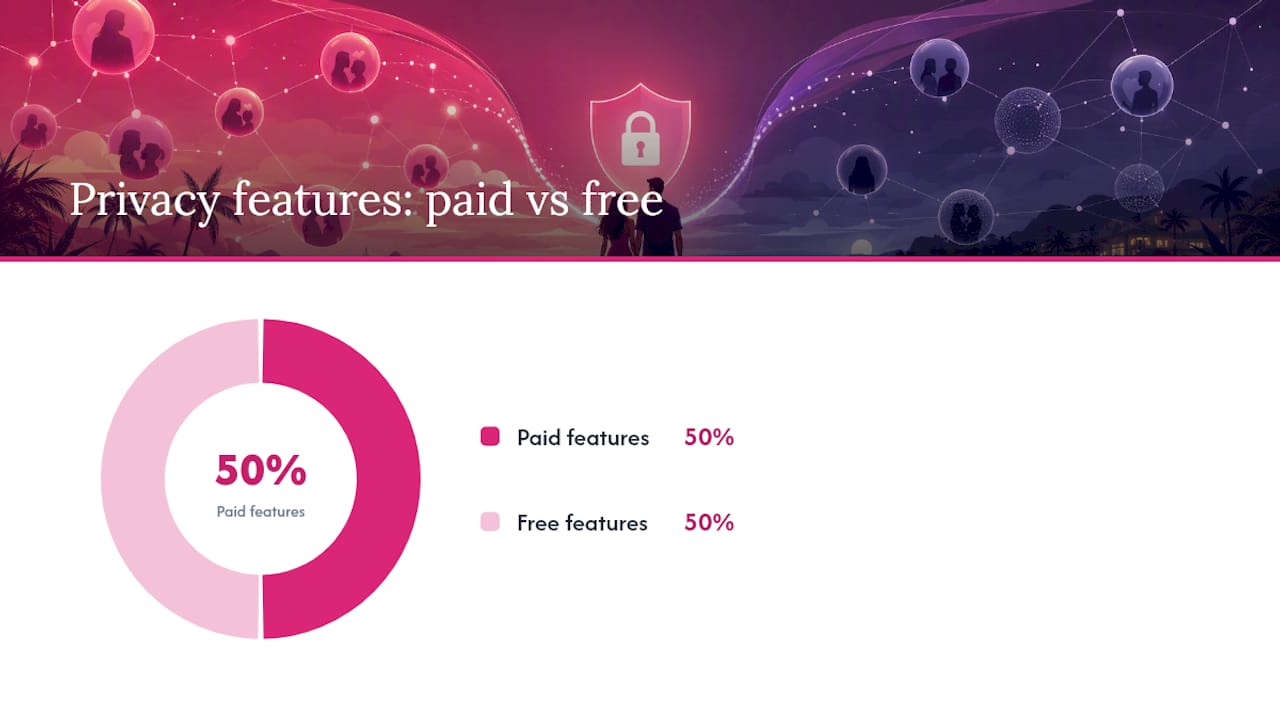
On pricing, incognito and hidden-profile features are commonly gated behind paid tiers on major apps, often bundled into a mid-range subscription rather than sold standalone. Snooze and pause functions, by contrast, are frequently free across most platforms since they reduce server load and don’t require ranking-algorithm changes. Expect subscription tiers offering enhanced privacy controls to run in a moderate monthly range, with better value typically found in longer commitment periods rather than month-to-month billing.
Paid Visibility Boosts: What You’re Actually Buying
A boost purchases a temporary priority placement window, usually somewhere between thirty minutes and a few hours, during which your profile gets pushed toward the front of relevant users’ feeds ahead of the standard ranking order. It’s a paid override of the organic algorithm, not an upgrade to your actual compatibility with anyone.
That distinction matters because of what academic critics have raised about the practice. A detailed ethical analysis of visibility-boost sales on dating apps argues that charging for exposure creates a pay-to-win dynamic: users with more disposable income get more attention, regardless of profile quality or genuine compatibility. That’s a legitimate fairness concern worth sitting with before you swipe your card.
Here’s the practical rule of thumb. A boost is worth trying only if your profile is already strong, meaning good photos, a complete bio, and verification done, and you’re testing timing rather than trying to fix an underlying problem. Boosting a weak profile just gets a weak profile seen by more people faster; it doesn’t convert lookers into matches.
To measure whether a boost actually worked, compare your match rate in the boosted window against your typical baseline over the same length of time on a normal day. If you don’t see a meaningfully higher match rate, the money bought attention, not results, and repeating the purchase without changing anything else is unlikely to change that outcome.
Your Step-by-Step Plan for Managing Visibility
Treat visibility management like a routine, not a one-time setting you toggle and forget. Here’s the sequence that actually protects both your privacy and your match quality.
Before you go live:
- Complete identity verification first; verified profiles tend to rank higher in trust-weighted algorithms and attract fewer bad-faith matches.
- Upload photos you’re genuinely comfortable with strangers seeing before matching, since incognito mode won’t hide them once you engage with someone.
- Review every privacy toggle in settings individually rather than accepting defaults, since default settings usually favor maximum visibility, not maximum discretion.
Weekly cadence:
- Stay fully visible during your first one to two weeks on any new app to capture the honeymoon boost.
- Consider hiding your profile during predictable low-traffic windows (very early mornings, most weekday afternoons) and staying visible during evenings and weekends when engagement is highest.
- Refresh your bio or swap a photo every couple of weeks; stale profiles that never change tend to lose ranking priority over time, a pattern consistent with reported staged-disclosure tactics among daters who rotate content deliberately.
Rapid exposure playbook:
- If you need a short burst of visibility (traveling to a new city, a specific event), use a boost during peak evening hours rather than midday, when far more users are actively browsing.
- Reactivate a dormant profile a few days before you need results, not the same day, so the algorithm has time to register renewed activity.
Safety steps:
- Restrict sensitive or identifying photos to matched connections only, never your public-facing profile.
- Keep ID verification current, since it’s the single strongest signal against catfishing and bot accounts.
- Know the reporting workflow on your app before you need it. Waiting to learn it during an actual bad encounter costs you time you don’t have.
Pro Tip: Don’t toggle visibility settings and judge results the same day. Algorithms need a few days of consistent behavior to recalibrate your ranking, so give any change at least a week before deciding it isn’t working.
How to Tell If Selective Visibility Is Actually Working
The right outcome from going selective isn’t more matches. It’s fewer, better ones. If you’re doing this correctly, expect your total impressions to drop while your signal-to-noise ratio improves, meaning a higher share of the people who do see you are genuinely compatible.
Give any settings change a week to ten days before drawing conclusions, since algorithms need consistent behavior data to recalibrate, and match volume naturally fluctuates day to day regardless of your settings.
Watch for the backfire scenario: if you’ve been hidden or paused for more than two or three weeks and come back to a visibility level that feels lower than before, that’s the algorithm interpreting extended inactivity as disinterest, not a punishment for privacy. The fix is consistent light activity, not permanent full exposure.
Track these instead of raw match count: response rate to your first messages, average conversation length before a lull, and how often chats convert to an actual meetup. A drop in matches paired with a rise in those three numbers means selective visibility is doing exactly what it’s supposed to do.
How SwingersUK Approaches Verification and Selective Discovery
Privacy-first visibility only works if the people you do let see your profile are real. SwingersUK builds its verification process around both AI screening and human review, filtering out fake profiles and bots before they ever reach your feed. That verification layer is what makes selective visibility meaningful rather than just a hiding tool.
The platform’s Pulse Handshake System adds a second layer: messaging only unlocks after mutual interest is confirmed on both sides, so visibility and consent stay tied together rather than one-directional. Combined with region-based private cam rooms and incognito-style privacy toggles, members get granular control over exactly who sees what, and when.
If you’re setting up a profile, start by completing ID verification before touching privacy toggles. Verification status feeds into how the platform treats your visibility, so sequencing it first gets you more accurate results from every setting you adjust afterward.
Legal Considerations and Data Protection for Your Dating Profile
Your dating profile data, including photos, messages, and location information, falls under standard data protection frameworks depending on where you live and where the platform operates. In the UK, that means protections under UK GDPR, which gives you the right to know what data a platform holds on you, request its deletion, and understand how it’s used for algorithmic matching.
Read the privacy policy of any app before uploading identifying photos, specifically the section on data retention after account deletion. Some platforms retain profile data for a defined period even after you delete your account, which matters if your goal is genuine, permanent invisibility rather than a temporary pause.
Verification systems that use AI and human review to confirm identity typically require you to submit government ID or a live photo match. Legitimate platforms process that data solely for verification and don’t display it publicly, but it’s worth confirming that explicitly in the app’s policy rather than assuming it. If a platform asks for identifying documents without a clear stated purpose or retention policy, treat that as a warning sign rather than a standard request.
Screenshotting or redistributing another user’s profile or private messages without consent can carry legal consequences depending on jurisdiction, separate from any app-specific terms of service violation. Selective visibility protects you from unwanted discovery, not from misuse by someone you’ve already matched with, so exercise the same judgment offline that you do with your settings.
Selective Visibility Features Across Major Dating Apps
Privacy tools vary meaningfully between platforms, and assuming one app’s incognito mode behaves like another’s is a common source of frustration.
Swipe-based apps generally offer an incognito or “hide profile” tier gated behind a paid subscription, hiding you from general browsing while still revealing your profile to anyone you swipe on. Women-first matching apps have historically emphasized control over who initiates contact rather than pure visibility toggles, meaning the privacy lever is often about who can message first rather than who can see you at all. Intent-based apps that emphasize compatibility prompts tend to focus privacy controls on limiting how much profile detail strangers see before a match, rather than hiding your existence from the pool entirely.
The pattern across all of them: none offer true invisibility while still letting you actively browse and swipe. Every app treats action (liking, messaging, matching) as a visibility trigger, because the core product only works if mutual interest eventually becomes mutual visibility. What differs is how much passive exposure you can strip away before that trigger point, and how much of that control sits behind a paywall versus in free settings.
The Psychological Effect of Controlling Your Own Visibility
Choosing who sees you, rather than being passively available to everyone, changes how dating apps feel to use. Reported curation behavior, with 59% of surveyed daters selectively approving who can interact with them, suggests this isn’t a fringe coping mechanism. It’s become a mainstream way people manage the emotional load of app-based dating.
Reduced visibility tends to lower the anxiety that comes with being endlessly evaluated by strangers, since fewer impressions means fewer moments of feeling judged or rejected at scale. For people who’ve experienced harassment or unwanted attention, that reduction in exposure isn’t just comfort. It’s a meaningful safety improvement.
The trade-off is a real one, though: too much hiding can create a sense of isolation or make the app feel dead, since visibility and momentum are linked. Users who go fully private and stay there for weeks often report feeling like the app “stopped working,” when in reality it stopped showing them to anyone because their own settings told it to. The healthiest pattern seems to be intentional cycling: visible when you have energy for it, private when you need a break, rather than treating either state as permanent.
How to Evaluate Whether Your Settings Are Actually Effective
Judge your visibility strategy the same way you’d judge any behavioral change: with a baseline, a defined test window, and a comparison, not gut feeling after one bad day of matches.
Start by tracking your current match rate and message-response rate for one full week before changing anything. That’s your baseline. Then adjust one setting at a time, whether that’s enabling incognito, pausing during off-peak hours, or turning on a boost, and give it the same length of time to run before comparing results.
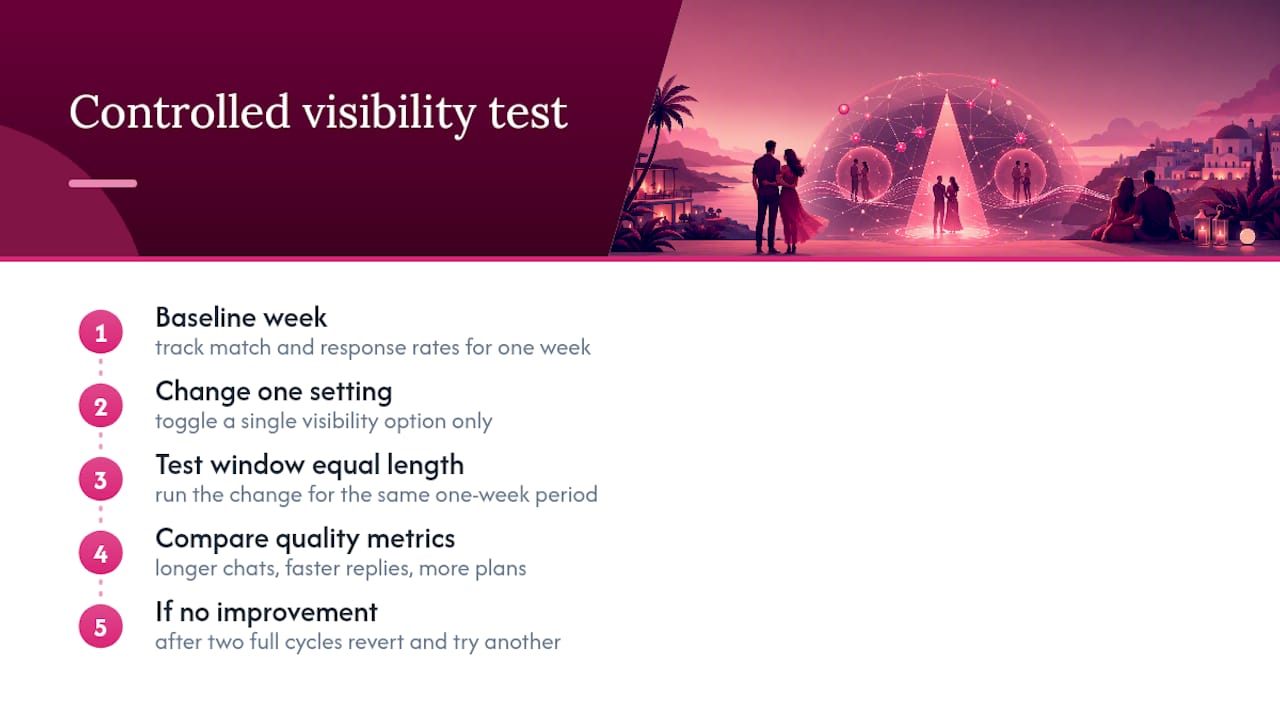
Resist changing multiple settings simultaneously. If you toggle incognito and buy a boost in the same week, you won’t know which change drove any shift in your numbers. Isolate variables the way you would in any small experiment, and keep a simple running note of what you changed and when.
The clearest sign a setting is working is a shift in quality metrics, not volume: longer conversations, faster reply times from matches, or a higher rate of conversations that lead to actual plans. If those numbers don’t move after two full test cycles, revert the setting and try a different lever instead of assuming visibility itself is the problem.
Typical Costs and Timelines You Should Expect
Most privacy-focused visibility features sit inside mid-tier or premium subscription plans rather than being sold as standalone purchases, with pricing that varies by app and typically improves per month on longer billing cycles. Boosts are usually sold individually or in small bundles, priced per use rather than as a subscription add-on.
Timeline-wise, expect the new-account honeymoon boost to last roughly one to two weeks. A single paid boost typically runs thirty minutes to a few hours of elevated placement. Snooze or pause settings take effect immediately and last exactly as long as you set them, with no algorithmic penalty for the pause itself.
The bigger timeline to plan around is recalibration: after any visibility change, whether that’s toggling incognito, coming back from a pause, or buying a boost, give the algorithm roughly five to ten days of consistent activity before judging whether the change worked. Ranking systems weight recent behavior heavily, but they don’t update instantly, and judging a setting change after 48 hours is judging it too early.
Testing Selective Visibility Before You Trust It
Most people treat visibility settings as a permanent identity choice: “I’m a private person” or “I want to be seen.” That framing gets in the way. Selective visibility works best as a short, deliberate experiment, not a personality trait you commit to forever.
Try this: go incognito for one full week, track your response rate and conversation depth, then re-enable full visibility for a second week and track the same numbers. Compare the two. You’ll learn more about your own dating patterns from that direct comparison than from any general advice, including this article.
Quality over quantity holds up under scrutiny here. A smaller pool of people who saw your verified, fully-formed profile beats a larger pool who caught a passing glance during a boost window. Pair whatever visibility experiment you run with solid verification on your end. Privacy settings control who sees you; verification controls whether the people who do see you can trust what they’re looking at. Neither one works as well without the other.
— Daniel
Where SwingersUK Fits Into Your Privacy Strategy
If you’re in the swinging or lifestyle community specifically, general dating apps rarely give you the level of discretion this space actually calls for. SwingersUK is built around that gap: every profile goes through AI and human-reviewed verification, so the people who can see you through selective visibility settings are confirmed real, not bots or fake accounts padding out a feed.
The Pulse Handshake System means messaging only opens up once interest is mutual on both sides, so you’re never exposed to unwanted contact just because you appeared in someone’s feed. Add region-based private cam rooms and granular privacy toggles, and you get visibility control built specifically for people who need more discretion than a mainstream app offers. Business and event hosts get the same level of control over their event listings and audience visibility.
Start by creating your account and completing ID verification, then explore the premium privacy features to find the visibility settings that match how much discretion you actually need right now.
Sources
- Selling visibility-boosts on dating apps: a problematic practice?
- Visibility becomes a strategy in online dating
- Recommender system — Wikipedia