
Soft vs Full Swap: Which Fits Your Relationship?
Soft vs Full Swap: Which Fits Your Relationship?
Soft swap and full swap are two distinct permission levels in swinging: soft swap excludes penetrative sex with outside partners, while full swap includes it. That single boundary shapes everything else, from emotional risk and STI exposure to how much pre-event negotiation you actually need. If you’re new to the lifestyle or reassessing where your comfort sits, start with soft swap, talk openly with your partner, and treat any upgrade to full swap as a deliberate, agreed decision rather than a natural next step.
Before you read further, do three things:
- Talk with your partner about which acts you’re each comfortable sharing with others
- Write down your hard limits and a safe word before any event
- Get a baseline STI test so you know where you stand before play begins
Key Takeaways
Soft swap and full swap are distinct permission levels, not stages of a progression; the right choice is the one that fits both partners’ comfort, health status, and relationship goals.
| Point | Details |
|---|---|
| Soft swap = non-penetrative | Kissing, touching, and sometimes oral sex with others; intercourse reserved for the primary partner. |
| Full swap = penetrative permitted | Requires additional negotiation on contraception, act types, and room format before any event. |
| No required progression | Experts confirm soft swap is a valid long-term preference, not a stepping stone to full swap. |
| Communication is the foundation | Name specific acts, agree on a safe word, and debrief within 48 hours of every event. |
| Health steps apply to both | Regular STI testing, barrier use, and vaccination reduce risk at both swap levels. |
Table of Contents
- What does soft swap actually mean?
- What is full swap and how does it work?
- How do soft swap and full swap actually differ?
- How do you negotiate boundaries and get real consent?
- What are the sexual health risks and how do you reduce them?
- How do you manage jealousy and aftercare?
- How do you decide which swap level fits your relationship?
- What should you expect at a swing club or party?
- What do experts say about soft vs full swap?
- Common myths and how queer communities define these terms differently
- Where did the terms “soft swap” and “full swap” come from?
- Legal considerations and privacy concerns
- How cultural differences shape views on soft and full swap
- A note from Daniel
- Useful resources
- Sources
What does soft swap actually mean?
Soft swap is partner exchange that stays non-penetrative. Both partners may engage with other people, but vaginal and anal intercourse with those partners is off the table. According to Men’s Health, soft swap commonly includes kissing, making out, mutual touching, and sometimes oral sex, though the exact acts vary by couple.
That last point matters more than most guides acknowledge. Two couples can both call themselves “soft swap” and mean genuinely different things. One couple reserves oral sex for their primary partner; another considers it well within soft swap territory. The label is a useful shorthand, not a contract.
Common soft swap activities (examples, not a universal list):
- Kissing and making out with other partners
- Mutual touching and manual stimulation
- Oral sex (for couples who include it in their soft swap definition)
- Watching each other with other partners in the same room
What soft swap typically excludes:
- Vaginal intercourse with outside partners
- Anal intercourse with outside partners
- Any act either partner has explicitly placed off-limits
One of the soft swap benefits most couples cite is that it preserves a specific intimacy, usually intercourse, for the primary relationship while still allowing shared excitement. That boundary can feel grounding, especially early on.
Pro Tip: When meeting a new couple, don’t rely on the label alone. Try: “We’re soft swap, which for us means kissing and touching but not oral or intercourse with others. What does it mean for you?” That one question prevents most misunderstandings before they happen.
What is full swap and how does it work?
Full swap means both partners may have penetrative sex with outside partners. Allo Health notes that full swap still requires explicit negotiation around contraception and STI prevention. Penetrative permission does not mean anything-goes permission.
Full swap couples typically agree on specifics before any event:
- Which acts are included: vaginal only, anal only, or both
- Contraception rules: condoms required for all penetrative contact, or specific exceptions agreed in advance
- Same-room or separate-room: whether partners stay visible to each other or move to private spaces
- Who with: whether the couple vets partners together or each person decides independently
Same-room full swap keeps both partners in view of each other, which many couples find reassuring. Separate-room arrangements allow more privacy but require higher baseline trust and a clear check-in plan. Neither format is inherently better; the right one depends on your relationship’s specific comfort level with visibility and autonomy.
Full swap is not a more advanced or superior version of soft swap. It’s a different preference with different implications, and those implications deserve careful thought before you commit to them.
How do soft swap and full swap actually differ?
The practical differences between the two approaches span five dimensions that directly affect your comfort, safety, and relationship health.

| Dimension | Soft swap | Full swap |
|---|---|---|
| Physical boundary | Non-penetrative only (kissing, touching, oral for some) | Penetrative sex with outside partners permitted |
| Emotional/jealousy risk | Generally lower; intercourse reserved for primary partner | Higher; penetrative intimacy shared with others |
| STI and pregnancy risk | Lower, though not zero | Meaningfully higher, especially without consistent barrier use |
| Negotiation complexity | Moderate; fewer acts to agree on | Higher; contraception, act types, room format all need agreement |
| Typical settings | Clubs, parties, home; same-room common | Clubs with private rooms, home parties; same-room or separate |
| Aftercare needs | Moderate check-in usually sufficient | More structured debrief often needed |
Quick decision signals:
- Choose soft swap if you want to reduce pregnancy risk while still sharing the experience
- Choose soft swap if either partner feels uncertain about penetrative intimacy with others
- Consider full swap only after you’ve had at least one successful soft swap experience and a thorough debrief
- Full swap couples report that the extra negotiation complexity is manageable when both partners have aligned expectations going in
How do you negotiate boundaries and get real consent?
Clear communication is the non-negotiable foundation of any swap arrangement. Without it, even a well-intentioned evening can produce confusion, hurt, or a breach of trust that takes months to repair. Community guides consistently recommend naming specific acts and agreeing on safe words before play begins, not in the moment.
Pre-event negotiation checklist:
- Sit down with your partner at least 24 hours before an event, not in the car on the way there.
- State your swap level and list the specific acts included and excluded.
- Agree on a safe word or signal that means “I want to stop” and one that means “I want to check in.”
- Name any hard limits: specific acts, specific people, specific scenarios that are off the table entirely.
- Agree on what happens if one partner wants to leave early.
- Decide whether you’ll check in with each other during the event, and how (a look, a touch, a word).
- Set a debrief time for after the event, even if it’s just 15 minutes before sleep.
Conversation scripts for common moments:
Initial chat with another couple: “We’re soft swap, which for us means touching and kissing but not intercourse. Are you comfortable with that, and what are your boundaries?”
In-event consent check: “I’m enjoying this. Are you still good? Anything you want to change?”
Stop/pause language: “I need to pause. Let’s take a break and check in.” (No explanation required in the moment.)
APA Division 44’s resources on consensual non-monogamy emphasize that ongoing mental-health check-ins and negotiated agreements are what distinguish healthy CNM from arrangements that erode trust over time.
Pro Tip: After every event, schedule a 20-minute debrief within 48 hours. Ask: “What felt good? What felt uncomfortable? Is there anything you’d change for next time?” Updating your agreement after each experience keeps it alive and prevents resentment from building silently.
What are the sexual health risks and how do you reduce them?
Both soft swap and full swap carry sexual health risk. Full swap generally increases STI and pregnancy exposure compared to soft swap, but non-penetrative acts are not risk-free. Skin-to-skin contact can transmit herpes and HPV; oral sex carries risk for gonorrhea, syphilis, and herpes.
Testing and barrier checklist:
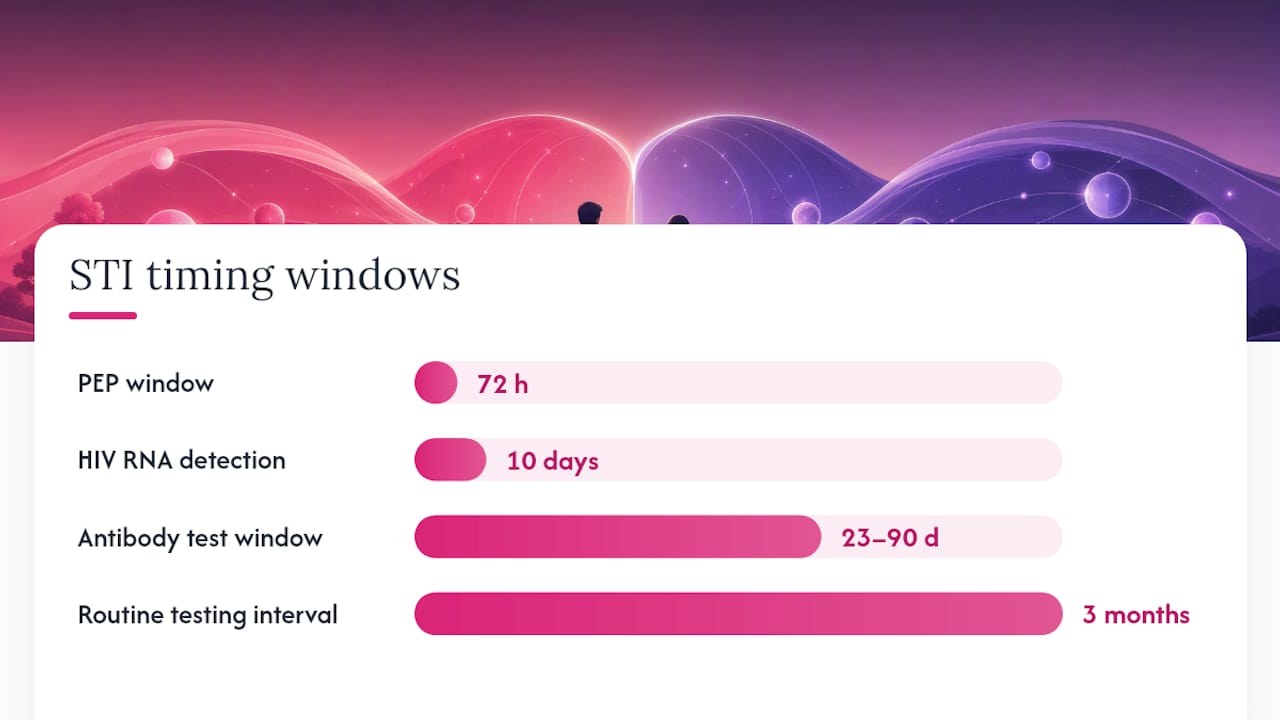
- Get a full STI panel (HIV, gonorrhea, chlamydia, syphilis, herpes, hepatitis B and C) every three months if you’re actively swinging
- Use condoms for all penetrative acts; use dental dams or condoms for oral sex if either partner has an active infection or unknown status
- Discuss PrEP with a healthcare provider if you’re engaging in full swap with multiple partners; PrEP reduces HIV transmission risk when taken consistently
- Confirm HPV and hepatitis B vaccination status; both are preventable with available vaccines
- Agree on contraception before full swap events: who is responsible, which method, and what happens if there’s a failure
Practical event-level rules:
- Carry your own condoms and barriers; never rely on a venue or other couple to supply them.
- Agree in advance whether you’ll share STI testing results with new partners, and how recent those results need to be.
- If you suspect exposure after an event, contact a healthcare provider within 72 hours to discuss PEP for HIV and testing timelines for other infections.
- Know the difference between window periods: HIV RNA tests can detect infection as early as 10 days post-exposure; standard antibody tests take 23–90 days depending on the test type.
Vaccination and ongoing prevention:
- HPV vaccine (Gardasil 9) is recommended for adults up to age 45 by the CDC
- Hepatitis B vaccine is a three-dose series; confirm your status before engaging in new sexual partnerships
- Hepatitis A vaccine is worth considering if you engage in oral-anal contact
For sexual health risk mitigation in swinging contexts, consistent barrier use and regular testing are the two levers that most reliably reduce transmission risk across both swap levels.
How do you manage jealousy and aftercare?
Emotional intensity is real in both soft and full swap situations, and it can be managed with pre-planned aftercare and honest check-ins. Jealousy is not a sign that something went wrong; it’s information about where a boundary may need adjustment.
Aftercare checklist:
- Immediately after an event: physical closeness with your primary partner (holding, touching, whatever feels connecting)
- Within 24 hours: a verbal check-in using open questions, not leading ones (“How are you feeling about last night?” not “You’re fine, right?”)
- Within 48 hours: the structured debrief described in the communication section
- Ongoing: a monthly relationship check-in that includes how the lifestyle is affecting both partners
Red flags that signal a pause:
- One partner consistently feels worse after events, not just occasionally unsettled
- Either partner is avoiding the debrief conversation
- Jealousy is being managed by restricting the other partner’s behavior rather than through communication
- Either partner feels pressured to upgrade from soft to full swap before they’re ready
- Intrusive thoughts about an event are disrupting daily functioning
Coping scripts for jealous reactions:
In the moment: “I’m feeling something I need to process. Can we step away for a few minutes?”
After the event: “I noticed I felt [jealous/uncomfortable] when [specific moment]. I’m not sure if it’s a boundary issue or just new-experience nerves. Can we talk about it?”
Framing jealousy as data rather than a verdict on the relationship keeps the conversation productive. Many couples find that one or two experiences of working through jealousy together actually strengthens their communication.
How do you decide which swap level fits your relationship?
Use this decision flow to match your comfort, trust level, and health status to a recommended next step. The goal is intentional action, not pressure in either direction.
- Assess individual comfort. Each partner answers privately: “Am I comfortable with my partner having penetrative sex with someone else?” If either answer is no or uncertain, soft swap is the right starting point.
- Check relationship trust baseline. Have you navigated a difficult conversation about jealousy or insecurity and come out stronger? If not, build that skill before adding the complexity of full swap.
- Review health status. Are both partners current on STI testing and contraception? Full swap without this foundation is a health risk, not just an emotional one.
- Assess prior experience. Have you attended at least one lifestyle event together, even as observers? Jumping to full swap as a first experience is a common source of regret.
- Run a soft swap trial. Attend one event with soft swap as your agreed level. Debrief within 48 hours. Ask: “Did we both feel respected and safe? Would we do it again?” If yes to both, you have a foundation to discuss whether full swap is something either of you wants.
- Revisit after three soft swap experiences. Many couples find soft swap is exactly where they want to stay. Men’s Health notes that experts see no required progression from soft to full swap; the choice should reflect your goals, not social pressure from the community.
- If considering full swap: negotiate the specifics (acts, contraception, room format) before the event, not during it. Treat it as a new agreement, not an extension of your soft swap rules.
For first-timers, the beginners guide to the lifestyle on Swingersuk covers event etiquette and first-attendance checklists in practical detail.
What should you expect at a swing club or party?
Clubs vary significantly in format and culture. Check the event description and ask the host directly before you arrive. Showing up without knowing whether a night is soft-swap-friendly or full-swap-oriented puts you in an awkward position that’s easily avoided.
Arrival checklist:
- Bring valid photo ID; most reputable venues require it at the door
- Know the club’s house rules on condom use, photography, and consent signals before you arrive
- Agree on your safe word and check-in signal with your partner before you walk in
- Carry your own condoms and barriers
- Dress to the venue’s stated code; most clubs post this on their event listing
How to present your boundaries to other couples:
Keep it brief and positive. “We’re soft swap tonight, so kissing and touching are great, but we’re keeping intercourse between us.” Most experienced lifestyle couples respect a clear, friendly boundary statement immediately. You don’t owe anyone an explanation beyond that.
If someone pushes back or ignores your stated boundary, that’s a consent violation. Alert the host or dungeon monitor and remove yourself from the situation.
Same-room vs. separate-room nights:
Some events are same-room only, meaning all activity happens in shared spaces. Others have private rooms available. Same-room events tend to attract more soft swap couples; events with private rooms are more commonly associated with full swap activity. Neither is universal, so confirm in advance.
Pro Tip: Read the event description carefully for language like “couples only,” “soft play welcome,” or “full swap friendly.” Hosts use these phrases deliberately. If the description is ambiguous, a quick message to the organizer before booking saves everyone an uncomfortable evening.
The Room Lobby on Swingersuk lists verified events with clear format descriptions, so you can filter by the type of night that fits your current comfort level.
What do experts say about soft vs full swap?
Experts in consensual non-monogamy are consistent on one point: there is no universal progression from soft to full swap. Both are valid endpoints, not rungs on a ladder.
The Advocate’s coverage of soft swapping reinforces that definitions vary across communities and that queer couples may draw boundary lines differently than straight couples. What counts as “sex” is not universal, which means the soft/full distinction itself shifts depending on who’s defining it.
APA Division 44 provides the most authoritative professional framework: consensual non-monogamy is associated with positive outcomes when it’s built on clear communication, negotiated agreements, and ongoing mental-health check-ins. The swap level matters less than the quality of the consent and communication surrounding it.
Common myths and how queer communities define these terms differently
The biggest myths about soft and full swap are that soft swap is just a stepping stone, and that full swap is the “real” version of swinging. Both are wrong.
Myth-busting:
- “Soft swap means you’re not fully committed to the lifestyle.” Soft swap is a complete, valid preference. Many long-term lifestyle couples never move to full swap and have no interest in doing so.
- “Full swap is more exciting or more intimate.” Excitement and intimacy are subjective. For many couples, the specific boundary of reserving intercourse for each other is precisely what makes soft swap feel more intimate, not less.
- “If you’re comfortable with soft swap, full swap is the logical next step.” Comfort with one doesn’t create an obligation to try the other. These are separate choices.
- “Soft swap is safer in every way.” It reduces penetrative risk, but non-penetrative acts still carry STI risk. Safer is relative, not absolute.
Queer and LGBTQ+ considerations:
As The Advocate explains, queer communities often define “sex” differently than heterosexual frameworks assume. For some same-sex couples, acts that a straight couple might classify as soft swap are the primary sexual acts in their relationship. Applying a heteronormative definition of “penetrative sex” to queer couples can misrepresent their actual boundaries entirely.
The practical fix is the same regardless of orientation: describe the specific acts you’re comfortable with rather than relying on the label alone. “We’re soft swap, which for us means…” works for every couple, every orientation.
Inclusive phrasing examples:
- “We’re comfortable with touching and oral, but not intercourse of any kind with others.”
- “For us, soft swap includes everything except penetration.”
- “We define our boundaries by specific acts, not labels. Here’s what we’re open to…”
Where did the terms “soft swap” and “full swap” come from?
The terms soft swap and full swap emerged from the organized swinging community in the United States, most visibly from the 1970s onward as swinging moved from informal private parties into more structured club and social networks. Early lifestyle communities needed shorthand to communicate compatibility quickly, and the soft/full distinction became the most widely adopted framework.
The language reflects a practical need: when couples meet at an event, they have limited time to establish mutual expectations. A two-word label signals a general permission level without requiring a full negotiation in a social setting. The terms spread through lifestyle publications, club directories, and eventually online forums and dating platforms as the internet made community-building easier in the 1990s and 2000s.
It’s worth noting that the terms are American in origin and most standardized in English-speaking lifestyle communities. International communities, particularly in Europe and Latin America, sometimes use different frameworks or translate the concepts differently, which is one reason why confirming specifics always matters more than assuming a shared definition.
Legal considerations and privacy concerns
Swinging between consenting adults is legal in the United States. No federal law prohibits consensual sexual activity between adults in private settings. However, several legal considerations apply depending on how and where you participate.
Key legal points:
- Age verification: All participants must be 18 or older. Clubs and platforms that fail to verify age face serious legal liability, which is why reputable venues and platforms enforce strict ID checks.
- Public indecency laws: Sexual activity in genuinely public spaces is illegal in all U.S. states. “Private party” and “members-only club” designations exist partly to establish a legal distinction from public conduct.
- State-level variations: Some states have laws affecting adult entertainment venues, including licensing requirements for clubs where sexual activity occurs. If you’re attending a club, the venue is responsible for its own compliance; you’re responsible for knowing the general legal framework.
- Consent documentation: While verbal consent is legally sufficient in most contexts, some couples and event organizers use written agreements for clarity. These aren’t legally required but can reduce misunderstandings.
Privacy concerns:
- Photography and video recording at lifestyle events is almost universally prohibited without explicit consent from everyone in frame. Violating this is both an ethical breach and potentially a legal one under state privacy and revenge-porn statutes.
- Online platforms that handle your profile, photos, and messages carry your personal data. Use platforms with verified privacy controls and clear data policies.
- Consider using a separate email address and screen name for lifestyle activities if you have professional or personal privacy concerns.
Swingersuk’s ID verification process uses AI and human review to confirm member identity, which reduces the risk of interacting with fake profiles or underage users. That verification layer matters for both legal compliance and personal safety.
How cultural differences shape views on soft and full swap
American swinging culture tends to treat soft and full swap as a binary with clear definitions. Other cultures approach the same territory differently, and those differences are worth understanding if you’re connecting with international couples or attending events abroad.
In Western European communities, particularly in Germany, the Netherlands, and Scandinavia, swinging culture is often more openly integrated into mainstream adult social life. The soft/full distinction exists but is sometimes less rigidly enforced; couples may negotiate act by act rather than declaring a category upfront.
Latin American communities, where Catholic cultural influence remains significant in many regions, often approach swinging with more privacy and discretion. The lifestyle exists and is active, but public labeling and open community identity are less common. Couples may participate without ever using the terms soft or full swap at all.
In East Asian contexts, swinging communities tend to be smaller and more private, with strong emphasis on discretion and face-saving. The concept of publicly declaring a swap preference to strangers at an event would feel culturally foreign in many of these communities, even among participants.
The practical implication for you: if you’re connecting with couples from different cultural backgrounds, don’t assume the soft/full framework translates directly. Ask about specific acts and comfort levels rather than leading with a label. That approach works universally, regardless of where someone’s cultural starting point sits.
A note from Daniel
You’re asking the right questions. The fact that you’re here, reading carefully and thinking through the distinction between soft and full swap before you act, already puts you ahead of most people who stumble into their first lifestyle experience without a clear framework.
What I’ve seen consistently in this community is that the couples who thrive are the ones who treat their swap level as a living agreement, not a fixed identity. They revisit it, adjust it, and communicate about it without shame. The label matters less than the conversation behind it.
Swingersuk was built with that reality in mind. The platform’s ID verification process, which combines AI and human review, means you’re connecting with real, verified people rather than bots or fake profiles. The Pulse Handshake System requires mutual interest before any message is sent, so you’re never receiving unsolicited contact. For couples who want to explore the digital side of the lifestyle before attending an in-person event, the private cam rooms offer a verified, region-based space to connect on your own terms.
Membership pricing is structured so you can explore the community at a free level before committing to a premium upgrade. That matters when you’re still figuring out what you want.
The community guidelines on Swingersuk reflect the same values this guide is built on: consent, verification, and zero tolerance for pressure or harassment. If you’re ready to connect with a community that takes those values seriously, that’s where to start.
Useful resources
Sexual health and testing:
- CDC STI testing locator: Find local testing sites and review recommended testing frequency by risk level.
- Planned Parenthood: Comprehensive STI information, testing, and PrEP/PEP guidance.
- Swingblog: Soft vs Full Swap: Community-level health and risk mitigation guidance specific to swinging.
Consent and CNM education:
- APA Division 44 CNM resources: Professional mental-health framework for consensual non-monogamy, including communication and wellbeing guidance.
- The Monogamy Experiment: Soft and Full Swap Definitions: Community-sourced consent scripts and negotiation frameworks.
Swingersuk community resources:
- Swingersuk Guidelines: Platform rules on consent, verification, and event behavior.
- Beginners guide to the lifestyle: First-attendance checklist and etiquette guide for newcomers.
- Soft swap meaning: Community-specific examples and conversation scripts for defining your boundaries on the platform.
This article provides general information for educational purposes. It is not a substitute for professional medical, legal, or mental-health advice. Confirm current health guidelines with a qualified provider and review applicable laws in your state before attending events.
Sources
- What Is a Soft Swap vs. a Full Swap in the Swinger Lifestyle?
- Soft Swap: What It Means, How It Works, and Is It Right for You? | Allo Health Blog
- Soft Swap vs. Full Swap: What Each Level Means
- Consensual non-monogamy (CNM) resources — APA Division 44