Stop Online Dating Scams in the UK: £106m, Freeze Payments, Verify ID
Stop Online Dating Scams in the UK: £106m, Freeze Payments, Verify ID
Romance fraud is one of the fastest-growing crimes targeting UK adults on dating apps and social platforms, and it costs victims real money and real trust. If you suspect a scam, stop all contact immediately, call your bank or card provider to freeze the account, and report the incident to Action Fraud right away.
TL;DR:
- Moving off the dating app to messaging platforms like WhatsApp is a common tactic to avoid platform moderation and hide scammers’ traces.
- AI-generated profile photos and voice cloning make it easier for scammers to create convincing fake identities and impersonate relatives to extract money.
- Scammers often use urgent stories involving medical emergencies or investment opportunities to pressure victims into wiring money through mule accounts, making recovery difficult.
- Reporting a scam promptly, freezing bank accounts, and capturing evidence are crucial, as most victims lose significant sums, often over hundreds of thousands of pounds in aggregate.
- Verified dating platforms with ID checks and mutual interest messaging significantly lower the risk of encountering fake profiles and scams.
Table of Contents
- How Do Online Dating Scams in the UK Actually Unfold?
- What Are the Warning Signs of a Dating Scam?
- How Are AI and Deepfakes Changing Dating Fraud?
- What Should You Do If You’ve Sent Money to a Scammer?
- How Can You Protect Yourself on Dating Apps and Sites?
- Where Do You Report a Dating Scam in the UK?
- Why Verified Platforms Cut Down on Dating Fraud
- Why Shame Keeps Victims Silent, and Why That Has to Change
- Find a Verified Community Built to Keep Scammers Out
- Sources
- FAQ
How Do Online Dating Scams in the UK Actually Unfold?
Romance fraud rarely feels like fraud at first. It usually starts with a well-crafted profile, a flattering opening message, and conversation that moves fast. Within days, the scammer pushes to leave the dating app for WhatsApp or text, where there’s no platform moderation and no paper trail for the app to flag.
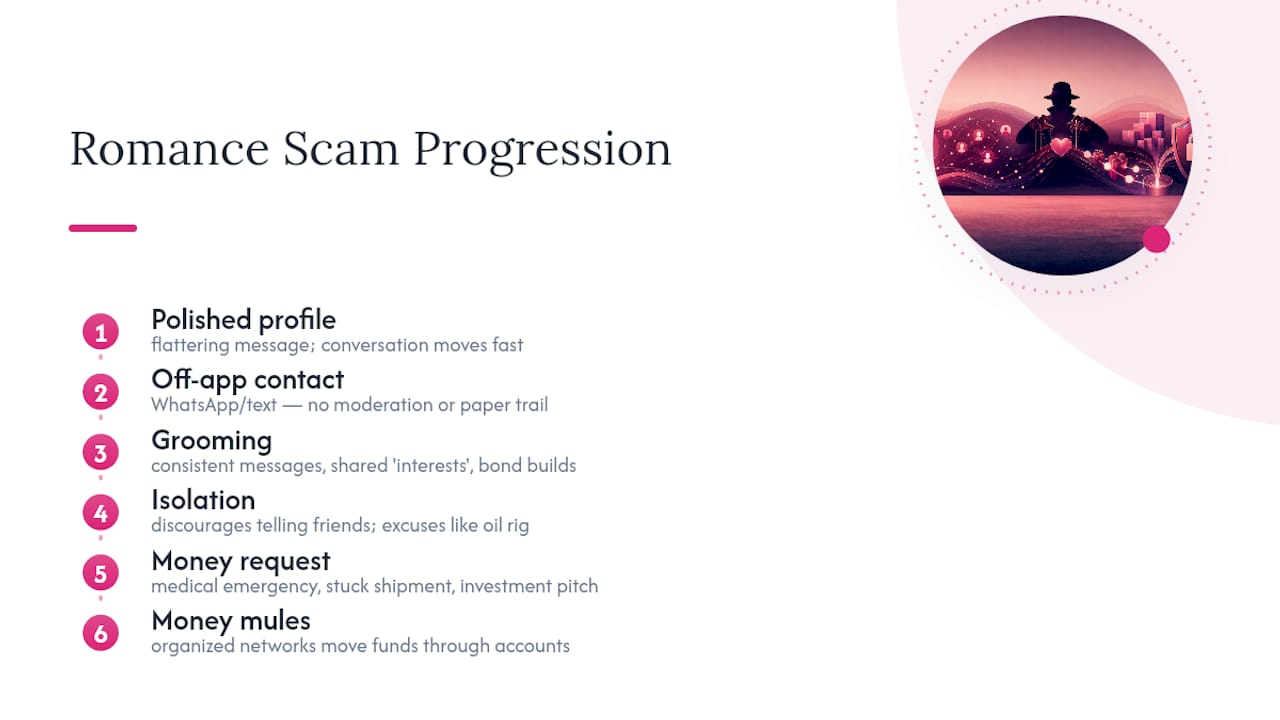
Next comes grooming: consistent messaging, shared “interests,” and a growing emotional bond built over weeks. Then isolation. The scammer discourages you from mentioning the relationship to friends, sometimes citing a demanding job “on an oil rig” or “peacekeeping abroad” that explains away video-call refusals and irregular hours. MoneyHelper notes this isolation is deliberate. It strips away the people who might otherwise ask hard questions.
The exploitation phase follows: a sudden medical emergency, a stuck shipment, a “guaranteed” investment. Many of these operations are run by organized networks using money mules, ordinary-looking bank accounts that move stolen funds quickly and make the trail nearly impossible to follow once cash has moved through two or three hands.
What Are the Warning Signs of a Dating Scam?
Some red flags show up in the first conversation. Others only become obvious once you compare notes with a friend, which is exactly why scammers try to stop you from doing that.
- A push to move off the dating app within a few messages, often citing “app glitches” or wanting to “talk properly”
- Repeated excuses for refusing video calls: bad connection, broken camera, working somewhere remote
- Profile photos that look professionally shot or oddly polished for a casual dating profile
- Small factual inconsistencies: a changing job title, a hometown that shifts between conversations
- Any request involving cryptocurrency, gift cards, “release fees” for a package, or an “investment recovery” service
According to HSBC UK, common phrasing includes claims of working abroad and sudden, urgent financial needs like medical bills or travel costs. If someone you’ve never met asks you to wire money to help them “get home” or “clear customs,” that’s the scam, not a coincidence.
Pro Tip: Save a photo from the person’s profile and run it through a reverse-image search before you invest any emotional energy. A scripted, evasive answer when you ask a specific, unexpected question is often as telling as the image search itself.
How Are AI and Deepfakes Changing Dating Fraud?
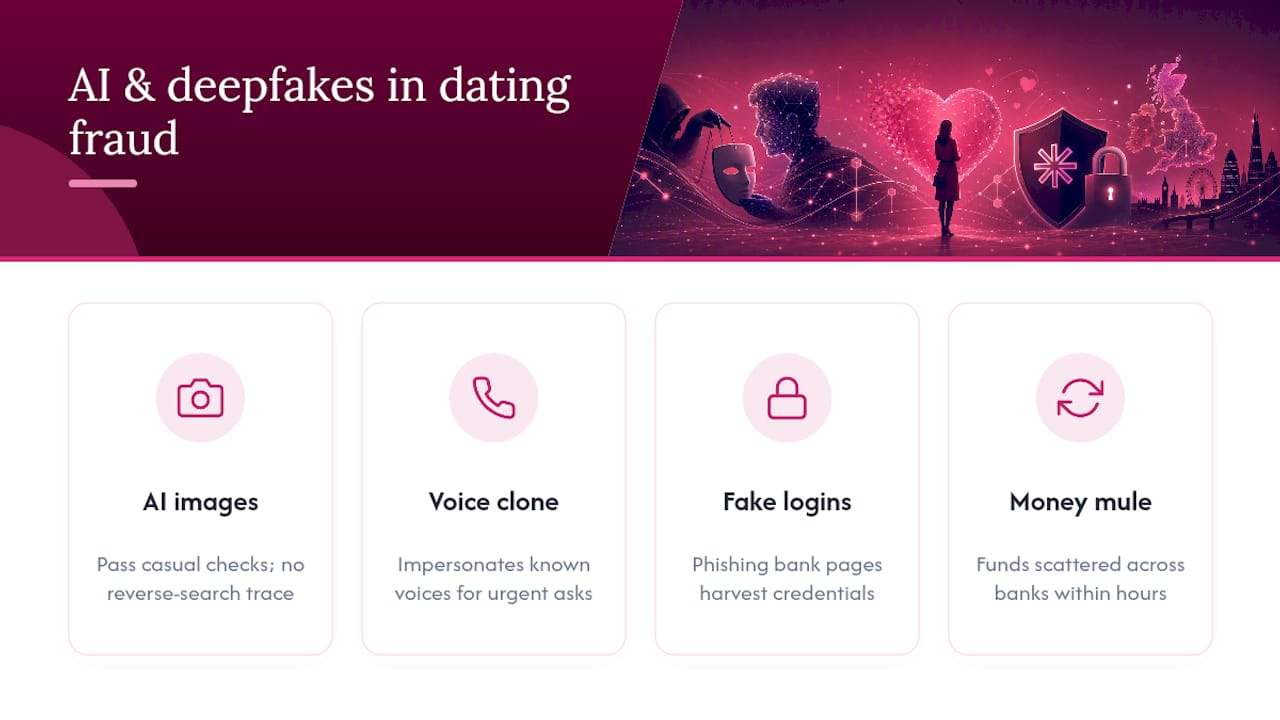
The old advice, “just get on a video call,” doesn’t offer the same protection it used to. Criminals now use AI-generated profile photos that pass casual scrutiny and can’t be traced through a simple reverse-image search, since the image was never a real person to begin with.
Voice cloning has made a specific, cruel variant more common: a “family member” or “friend” calling in apparent distress, asking for urgent funds, using a voice that sounds convincingly like someone you know. Fraud losses in the UK linked to AI-enabled scams have climbed toward £1.3 billion a year across scam categories, and dating platforms are a growing share of that picture.
Some networks go further, directing victims to fake banking pages that mimic a real bank’s login screen to harvest credentials or confirm a fraudulent transfer looks legitimate. Combined with money-mule accounts that scatter funds across multiple banks within hours, these tactics make recovery far harder once money has actually moved.
What Should You Do If You’ve Sent Money to a Scammer?
Speed matters more than anything else once you suspect you’re being scammed. Follow these steps in order:
- Stop all contact with the person immediately, but don’t delete the conversation.
- Screenshot everything: messages, payment confirmations, profile details, timestamps.
- Call your bank or card provider the same day to report the transaction and request a freeze or chargeback.
- Report to Action Fraud, or your local police directly if you’re being blackmailed.
- Record specifics: full names used, payment references, account numbers, any details about a “business” the scammer mentioned.
Victims of romance fraud lost an estimated £106 million in a recent year in the UK alone, and that figure only counts reported cases. Many victims stay quiet out of embarrassment, which means the real total is almost certainly higher. Reporting isn’t just about your case. Every report helps banks and police map the mule networks moving this money.
How Can You Protect Yourself on Dating Apps and Sites?
Prevention isn’t about giving up on online dating. It’s about a handful of habits that close off the openings scammers rely on.
- Keep personal details, workplace, home area, daily routine, off your public profile.
- Lock down privacy settings on Facebook and Instagram so a scammer can’t cross-reference your life before messaging you.
- Insist on a live video call before you invest serious emotional time, and treat any refusal as data.
- Never send money, gift cards, or cryptocurrency to someone you haven’t met in person, no matter how urgent it sounds.
- If a real-world purchase or shared expense does come up, use traceable, conventional payment methods, not wire transfers to a stranger.
- Turn on two-factor authentication for your dating and email accounts, and keep screenshots of key conversations as a backup.
Pro Tip: Prefer platforms that verify identity before allowing messages to flow. A site that checks ID and requires mutual interest before contact removes a huge share of the fake-profile volume before you ever see it.
Where Do You Report a Dating Scam in the UK?
The Metropolitan Police and Action Fraud handle the practical reporting side, but recovery often needs more than one call.
- Action Fraud is the national reporting route for fraud and cybercrime in England, Wales, and Northern Ireland.
- Your bank’s fraud team can freeze accounts and sometimes reverse a transfer, but once funds have moved through several mule accounts, recovery becomes far less likely.
- Local police should be your first call if you’re being actively blackmailed or threatened.
- Victim support charities help with the emotional toll, which is often underestimated. Fraud teams increasingly urge victims not to suffer in silence and to tell a friend or family member early.
Keep every message, payment reference, and screenshot. Investigators rely on that detail to link individual cases to wider mule networks.
Why Verified Platforms Cut Down on Dating Fraud
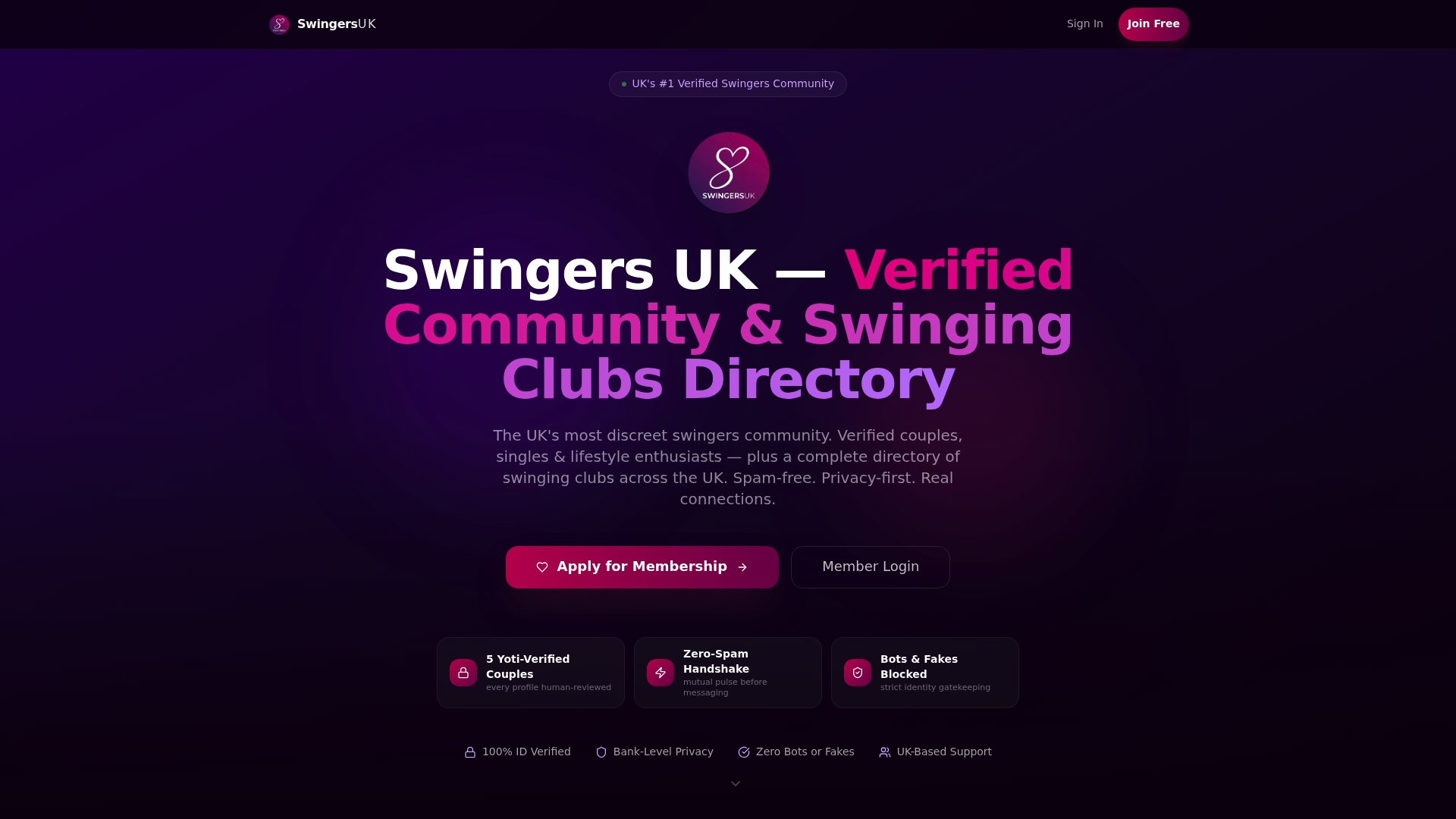
Fake profiles thrive where there’s no verification and no friction before messaging starts. Swingersuk addresses both problems directly: every profile goes through AI and human ID checks before it’s live, and the Pulse Handshake System requires mutual interest before a conversation can even begin, which removes the flood of unsolicited first messages scammers depend on. Combined with clear community guidelines, that structure gives members far less exposure to the fake-profile tactics described above.
Why Shame Keeps Victims Silent, and Why That Has to Change
Romance fraud works because it exploits something real: trust, loneliness, hope. Victims often blame themselves, which is exactly backwards. The people running these schemes are practiced manipulators working from scripts refined across thousands of targets.
If you’ve been targeted, report it and tell someone you trust. Combine an open mind about meeting people online with a healthy insistence on verification, video calls, and time. That balance protects you without shutting you off from genuine connection.
— Daniel
Find a Verified Community Built to Keep Scammers Out
Most dating platforms let anyone create a profile and start messaging within minutes, which is precisely the gap romance scammers exploit. Swingersuk closes that gap before it opens: every member passes AI and human identity verification, and the Pulse Handshake System means nobody can message you until interest is mutual, so there’s no flood of cold approaches to sort through.
For UK couples, singles, and LGBT+ members who want a lifestyle community built around privacy and consent rather than open floodgates, that verification-first design is the difference between browsing cautiously and browsing with confidence. You can check how the ID checks work on the identity verification page, review the community standards on the guidelines page, or head straight to Swingersuk to create a verified profile and see who’s genuinely looking to connect.
Sources
- Romance fraud — Action Fraud / UK police reporting
- Victims of romance fraud tricked out of £106m last year - BBC News
- How to avoid romance scams — HSBC UK
FAQ
How Do You Know If You’re Talking to an Online Dating Scammer?
Watch for a fast push to move off the dating app, repeated excuses for avoiding video calls, inconsistent personal details, and any request for money, gift cards, or cryptocurrency. A reverse image search on their profile photo often reveals a stolen picture within seconds.
What Are the Latest Dating Scams Going Around in the UK?
AI-generated profile photos, voice-cloned calls impersonating relatives, and fake investment or crypto “opportunities” introduced mid-relationship are among the fastest-growing tactics, part of a wider rise in AI-enabled fraud across the UK.
What Are Some Common Types of Current Online Scams?
Beyond romance fraud, common current scams include investment and crypto schemes, package “customs fee” requests, fake job offers, and phishing pages that mimic real bank logins to steal your credentials.
Are Any Specific Dating Sites Known for Scams?
Scammers target any platform with weak identity checks and open messaging, rather than one specific site. Platforms without ID verification or mutual-consent messaging tend to see far higher volumes of fake and scripted profiles.
Is Swingersuk Safe From Fake Profiles and Scammers?
The platform requires identity verification on every profile and uses a mutual interest system before members can message each other, reducing unsolicited contact.