
Verified Creator Profiles on UK Swingers Marketplaces, Ofcom/ICO & VAT Steps
Verified Creator Profiles on UK Swingers Marketplaces, Ofcom/ICO & VAT Steps
A verified creator or business profile is the right, practical route for listing events, selling tickets, and running private cam rooms safely on a swingers marketplace. You need identity verification, UK-compliant age assurance under Ofcom and ICO guidance, and solid data-protection practices working together. Some platforms show what this looks like when built correctly from the ground up.
TL;DR:
- Verified creator profiles on swingers marketplaces enable event hosting, ticket sales, private cam rooms, and analytics, but only after successful identity and age verification.
- Setting up involves detailed documentation, including ID uploads, profile completion, privacy controls, and payment testing, with verification delays depending on platform volume.
- UK regulations require implementing highly effective age assurance methods, such as biometric checks or digital wallets, and conducting a DPIA when biometric data is used for verification.
- VAT registration is mandatory once turnover exceeds £90,000 in a year, with 20% standard VAT usually applied to ticketed events, and prices should be VAT-inclusive.
- Running private cam rooms securely involves authenticated access, session logging, verified payment, clear rules, and prompt reporting of suspicious activity.
Table of Contents
- What Creator Profiles Let You Do on a Swingers Marketplace
- How Do You Set Up and Verify a Creator Profile?
- Verification, Age Assurance, and Privacy: What UK Rules Expect
- Selling Tickets Through Your Creator Profile: VAT Basics
- Hosting Private Cam Rooms: Tech, Moderation, and Safety Checklist
- Promoting Events Without Breaking Marketing Rules
- What the Evidence Shows About Verified Platforms
- Start Your Creator Profile on SwingersUK
- Sources
- FAQ
What Creator Profiles Let You Do on a Swingers Marketplace
Once verified, a creator or business account unlocks the tools that turn a personal profile into an actual venue for hosting and monetization. These features exist specifically for organizers, performers, and venue operators who need more than a standard member listing.
- Event listing tools for one-off parties, recurring meetups, or club nights
- Ticket sales built into your profile so attendees pay and register in one flow
- Private cam rooms for one-to-one or group paid sessions
- A verified host badge signaling to members that your identity and business have passed review
- Basic analytics showing views, ticket conversions, and repeat attendance
- Promo widgets that surface your upcoming events on the platform’s calendar and directory
The practical use cases vary widely. Some creators run ticketed live events at a rented venue once a month. Others host recurring private streams behind a paywall, or run subscription-style access to a series of cam sessions. A few combine both, using cam rooms to promote an in-person event happening the following weekend.
None of this activates until verification clears. Every platform serious about safety gates monetized features behind ID checks, and messaging between hosts and prospective attendees runs through mutual-consent systems rather than open inboxes, which cuts down on unsolicited contact before it starts.
How Do You Set Up and Verify a Creator Profile?
Getting from sign-up to your first ticketed event usually follows a predictable sequence. Rushing any step tends to slow down approval rather than speed it up.
- Register and select business or creator account type. This determines which fields, permissions, and monetization tools you get, and it typically requires age documentation upfront.
- Upload ID and complete photo matching. Expect to submit a government ID and a live photo match. Human review often follows automated checks, especially for accounts requesting cam room or ticketing permissions.
- Wait for verification status. Turnaround varies by platform load, but most services let you check status inside your account dashboard rather than leaving you guessing.
- Complete your profile fields. Business name, a clear description of what you host, event terms, a written refund policy, and any visible content warnings all belong here before you go live.
- Configure privacy and age-gate settings. Decide who can view event listings publicly versus who needs to be logged in and age-verified first.
- Set up ticketing and confirm payment verification. Connect payment processing and test a dummy transaction if the platform allows it.
- Do a final go-live check. Confirm your age gates work, your refund policy is visible, and your cam room settings match what you intend to offer.
On SwingersUK, setting up a business profile follows this structure directly, with ID verification handled through combined AI and human review before any monetized feature unlocks.
Pro Tip: Write your refund policy before you list your first event, not after your first dispute. A vague or missing policy is the single most common reason event organizers lose chargebacks.
Verification, Age Assurance, and Privacy: What UK Rules Expect
Regulators treat age assurance for adult-content platforms as a compliance requirement, not a nice-to-have. The Ofcom and ICO joint statement makes clear that services allowing pornographic content must implement highly effective age assurance, known as HEAA, and that simple self-declaration checkboxes do not meet that bar.
Acceptable HEAA methods generally include:
- Photo-ID matching against a live selfie
- Digital identity wallets
- Mobile network operator (MNO) age checks
- One-time facial age estimation
- Credit-card checks, used cautiously given their limits as a standalone method
Here’s where it gets more complex for platform operators specifically. When age assurance relies on biometric data, such as facial matching, the ICO’s guidance on age assurance treats that as special-category data processing. That triggers a requirement for a Data Protection Impact Assessment, or DPIA, before the process goes live. Skipping this step is not a paperwork shortcut. It’s a compliance gap that regulators are actively watching.
Ofcom’s own industry bulletin from March 2026 notes that regulators expect ongoing record-keeping and compliance monitoring, not a one-time check at sign-up. That means clear privacy notices, documented consent records, and a defined data-retention policy for anything collected during verification.
Selling Tickets Through Your Creator Profile: VAT Basics
You need to register for VAT once your taxable turnover crosses £90,000 in a rolling 12-month period, and the standard VAT rate sits at 20% on most ticketed admissions, according to Gov. Some smaller operators qualify for flat-rate schemes, which can simplify bookkeeping at a fixed percentage rather than tracking VAT on every transaction individually.

Cultural-event exemptions exist but rarely apply to commercial swingers events. HMRC’s notice on admission charges to cultural events limits these exemptions mostly to eligible nonprofit bodies and specific fundraising circumstances, so don’t assume your event qualifies without checking first.
Before your first ticket sale, run through this:
- Display prices as VAT-inclusive, not plus VAT at checkout
- Issue clear tickets and receipts for every transaction
- Write down your refund terms and apply them consistently
- Talk to an accountant once you’re near the £90,000 threshold or handling regular high-value events
Hosting Private Cam Rooms: Tech, Moderation, and Safety Checklist
Running a paid cam room safely means treating it like a monetized venue, not a casual video call. A handful of controls make the difference between a well-run room and a liability.
- Secure the stream itself with authenticated access so only paying, verified members can join.
- Verify payment before granting entry, not after the session starts.
- Log sessions for record-keeping in case of a dispute or incident report.
- Set visible rules and capture consent from participants before the room goes live.
- Watch for circumvention attempts, like guests trying to bring in unverified friends mid-session.
- Report suspicious accounts immediately rather than waiting to see if the behavior repeats.
Cam room setup on SwingersUK builds these controls into the room itself rather than leaving moderation entirely to the host.
Pro Tip: Keep session logs for longer than feels necessary. If a dispute surfaces weeks later, a timestamped record is often the only thing that resolves it quickly.
Promoting Events Without Breaking Marketing Rules
Marketing consent has to be active and specific. The ICO’s consent guidance bans pre-ticked opt-in boxes and requires that marketing consent sit separately from your general terms and conditions.
If you’re using social platforms to target audiences with uploaded contact lists, understand that you may share responsibility with that platform for how the data gets used, which means minimizing what you upload in the first place. On-platform promotion tends to be simpler to keep compliant:
- Paid placement or boosted listings inside the marketplace
- In-app notifications sent only to members who’ve opted in
- Calendar and directory visibility that doesn’t require separate marketing consent at all
What the Evidence Shows About Verified Platforms
Most advice on creator verification stays theoretical, listing what regulators expect without showing how it works on an actual platform. That gap is where a lot of organizers get stuck.
SwingersUK’s business profile system is a useful reference point precisely because it ties verification to functionality rather than treating them as separate concerns. Identity checks run through combined AI and human review, which cuts down on the fake accounts that plague open marketplaces. Messaging between members runs through the Pulse Handshake system, requiring mutual interest before contact opens, which directly addresses the unsolicited-messaging problem regulators keep flagging in consent guidance.
What this proves, in practice, is that compliance and monetization aren’t opposing goals. A platform that gates cam rooms and ticketing behind verification isn’t slowing creators down. It’s building the trust that gets attendees to actually pay.
— Daniel
Start Your Creator Profile on SwingersUK
If you’re ready to list events, sell tickets, or open a private cam room, the setup starts with verification, not the other way around. Some marketplaces are built for swingers, couples, and singles who want identity checks integrated from the start, rather than added later after fake accounts become a problem.
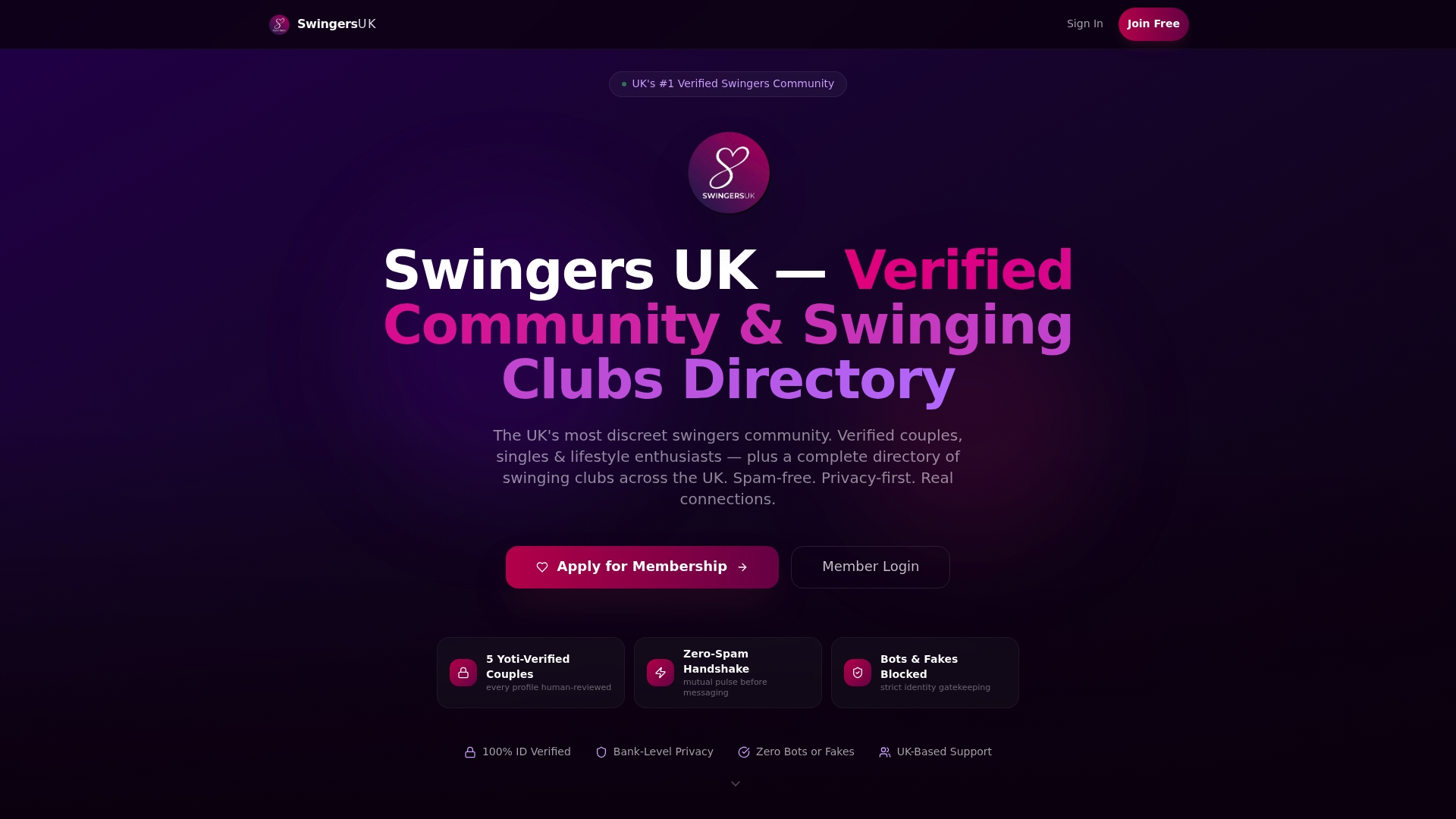
Begin by completing ID verification, which clears the way for business features like ticketing and cam rooms. From there, set up your business page with your event terms and refund policy visible from the start, and check the pricing page to see which tier matches your monetization plans. Get your age-assurance and data-protection checks squared away first. Everything else builds on that foundation.
Sources
FAQ
Do I Need a Business Account to Sell Event Tickets?
Yes. Standard member profiles typically can’t access ticketing tools, since monetized features sit behind the verification gate that business and creator accounts go through. You’ll need to register as a creator or business type and complete ID verification before ticket sales activate.
How Long Does Creator Profile Verification Take?
Turnaround depends on document quality and current review volume, since most platforms combine automated checks with human review for business accounts. Check your account dashboard for status updates rather than assuming a fixed timeline.
Do I Need to Register for VAT to Sell Event Tickets?
You must register once your taxable turnover exceeds £90,000 in a rolling 12-month period, at which point the standard 20% VAT rate applies to most ticketed admissions. Below that threshold, registration isn’t required, though some organizers register voluntarily for other business reasons.
Is Self-Declaration Enough for Age Verification?
No. Ofcom and ICO guidance is explicit that self-declaration checkboxes don’t meet the highly effective age assurance standard required for platforms hosting adult content. Accepted methods include photo-ID matching, digital identity wallets, and mobile network operator checks.
Do I Need a DPIA for Age Verification?
If your age-assurance process uses biometric data, such as facial matching, you likely need a Data Protection Impact Assessment before launch. The ICO treats biometric age checks as special-category data processing, which carries stricter legal requirements than standard verification.