
Stop Cold Messages: Enable These 5 Consent Settings on Dating Apps
Stop Cold Messages: Enable These 5 Consent Settings on Dating Apps
Consent settings on dating apps are the tools that put mutual agreement into the interface itself: mutual opt-in messaging, verification badges, explicit-content filters, and consent check-ins. The first move is simple. Open your privacy and messaging settings today, switch on mutual opt-in or verification wherever the app offers it, and treat identity verification plus handshake-style messaging as your baseline for trust. Some platforms build these protections into the sign-up flow rather than leaving them buried in a menu.
TL;DR:
- Mutual opt-in messaging and identity verification significantly reduce unwanted contact and scams, especially when default settings activate these protections during sign-up.
- Granular privacy controls allow users to limit who sees their photos, location, and online status, and to trigger explicit media filters before viewing sensitive content.
- Regular consent check-ins, ideally weekly early on and monthly later, help build trust and ensure ongoing agreement in communication.
- AI tools and location sharing must include explicit consent options, as automatic inference and data leaks pose privacy and safety risks.
- Platforms that integrate verified identities, mutual interest messaging, and transparent moderation foster a safer, consent-aware environment for users.
Table of Contents
- How Do You Set Consent Settings on Dating Apps Right Now?
- What Do Consent Features Actually Look Like Inside an App?
- How Do You Ask for Consent in a Text Message?
- Why Do Privacy and AI Features Complicate Consent?
- What Red Flags Signal a Consent Problem?
- What Should Platforms Be Doing Better?
- How Does Swingersuk Build Consent Into the Platform?
- Why Consent Is a Habit, Not a Setting
- Where Can You Find These Consent Settings Already Built In?
- Sources
How Do You Set Consent Settings on Dating Apps Right Now?
You don’t need an hour to lock down your account. Most of the meaningful consent settings on dating apps live in two or three menus, and you can work through them in one sitting.
- Restrict who can message you. Switch from open inboxes to mutual-match-only messaging so strangers can’t land in your chat without a shared “yes” on both sides.
- Turn on identity verification and two-factor login. ID checks and login codes cut down on catfishing and impersonation before a conversation even starts.
- Enable explicit-media filters. Look for blur-until-approved or hold-to-view settings so unsolicited images stay hidden until you choose to see them.
- Lock down visibility controls. Limit who sees your photos and precise location, and use disappearing messages for anything sensitive.
- Build a consent-check habit. Pick a simple rhythm (weekly for new connections, monthly once things settle) and save a script or two you’re comfortable reusing.
None of this takes long, and the payoff compounds. Once mutual opt-in and verification are on, the volume of unwanted contact drops fast.
What Do Consent Features Actually Look Like Inside an App?
Consent settings on dating apps aren’t one feature. They’re a cluster of small design choices that together decide who can reach you and how.
Mutual opt-in, or “handshake,” messaging means both people have to express interest before a chat opens. This single design choice removes most cold, unwanted messages, since nobody can message you unless you’ve already signaled you’re open to hearing from them.
- Consent prompts and in-chat check-ins: short interface nudges (a button, a quick confirmation screen) that ask “still good with this?” before a conversation moves somewhere more personal.
- Explicit-media controls: blur-by-default images, hold-to-reveal previews, or approve-before-open settings that stop explicit content from appearing without a deliberate choice to view it.
- Granular visibility toggles: separate switches for photo access, precise location, and online status, so you’re not stuck with one all-or-nothing privacy setting.
- Verification badges and human review: a marker that someone passed an identity check, ideally backed by real moderation rather than a simple photo upload.
Design researchers studying online dating consent interfaces argue that stepwise confirmations and explicit prompts work better than relying on implicit cues like a swipe or a match. A match tells you someone is interested. It tells you nothing about what they’re comfortable with next.
Pro Tip: Check whether an app’s explicit-content filter defaults to “on.” If you have to hunt for it in a submenu, that’s a sign the platform is treating consent as optional rather than built in.
How Do You Ask for Consent in a Text Message?
Digital consent works the same way in-person consent does: clear language, real answers, no assumptions. The difference is that text strips out tone and body language, so vagueness causes more damage online than it does face to face.
Try templates like these, adjusted to your own voice:
- “I’d like to send something a little more explicit. Are you into that right now?”
- “Before we meet up, I want to check we’re on the same page about what tonight looks like.”
- “Just checking in. Still feeling good about where this is going?”
Each one asks a direct question with a real yes-or-no answer, which is the whole point. Vague lines like “you up?” invite guessing, not agreement.
Consent check-ins work best on a schedule rather than only in the moment things get tense. Recommendations from consent-check frameworks suggest checking in more often early in a connection and easing off once trust is established, roughly weekly at first and monthly once a rhythm forms, based on guidance from sexting-specific consent guides. Frame check-ins as normal etiquette, not an accusation. If you’re keeping any record of a conversation for your own safety, know that saving screenshots involves a privacy trade-off: useful evidence if things go wrong, but data you now have to protect.
Why Do Privacy and AI Features Complicate Consent?
Consent doesn’t stop at messaging. The data an app collects, and the AI it runs on that data, can quietly undermine agreements you thought you’d made.
Location and metadata leaks are not hypothetical. One 2025 investigation found that a dating app had exposed users’ location data and personal information, the kind of exposure that turns a privacy failure into a stalking risk. That’s the practical stakes behind every location toggle you leave switched on.
AI features raise a separate problem. Icebreaker suggestions, automated photo selection, and message rewriting tools all touch your words and images. Advocacy groups including the Electronic Frontier Foundation argue these tools should require explicit opt-in, not run by default, since letting software infer or rewrite what you meant to say is its own consent problem.
A few mitigations worth adopting:
- Review app permissions and revoke location or contact access you don’t actually need.
- Use ephemeral or disappearing messages for anything you wouldn’t want stored indefinitely.
- Check whether message and image retention policies are disclosed, and for how long content is kept.
- Turn off AI-assisted messaging features you didn’t knowingly enable.
What Red Flags Signal a Consent Problem?
Some warning signs show up before a single explicit message gets sent. Watch for:
- Repeated pressure after you’ve said no or gone quiet.
- Pushing hard to move the conversation off-platform within minutes of matching.
- Ignoring or joking past a boundary you’ve already stated.
- Sending explicit images or requests without asking first.
A short boundary script goes a long way: “I’m not comfortable with that. Let’s not go there.” If the pressure continues, block and report rather than negotiate further. Age matters here too. If anything about a profile suggests the person is underage, stop the conversation and report it to the platform immediately rather than trying to verify it yourself. If you ever need a record for your own safety, screenshot the relevant exchange and store it somewhere private rather than leaving it in the app.
What Should Platforms Be Doing Better?
Academic research on dating-app behavior found that matching and messaging patterns function as informal consent cues, but these signals are unreliable. The same study links heavy app use to more sexual objectification and more difficulty getting clear consent once a conversation moves offline. A match or a swipe was never designed to carry that much meaning.
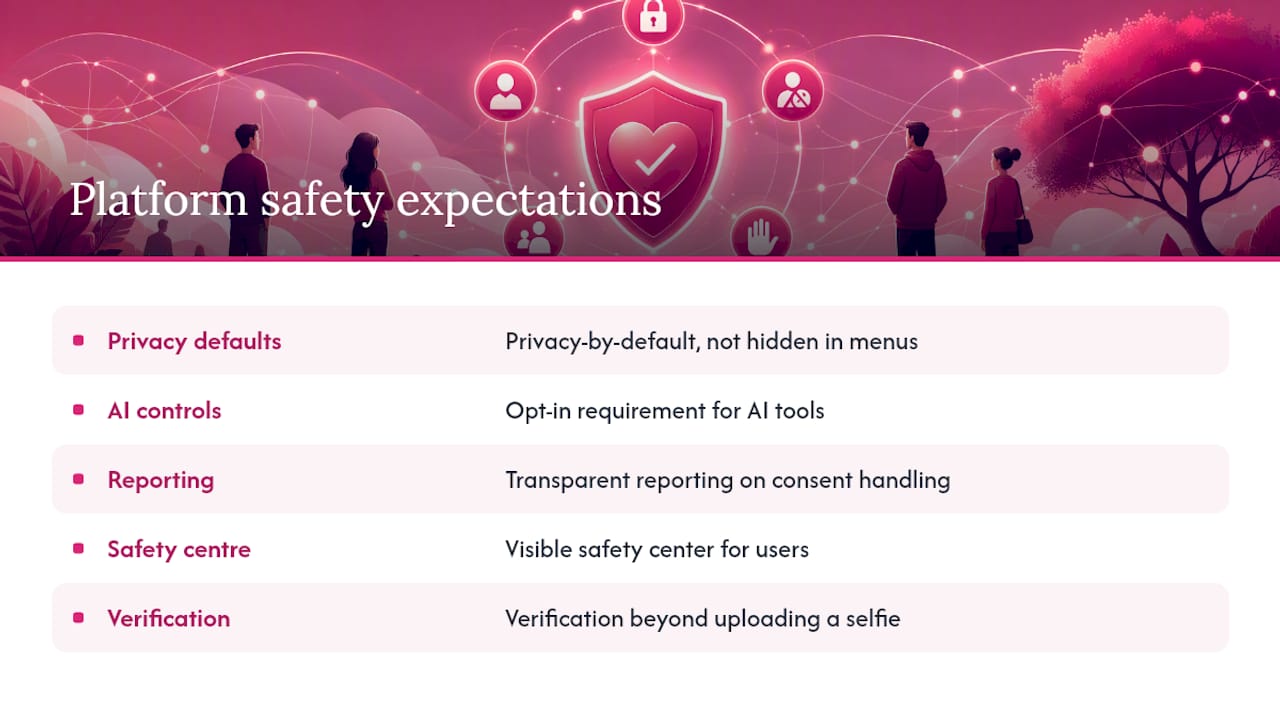
Advocacy groups are pushing for three things: privacy-by-default settings instead of privacy buried in menus, opt-in requirements for AI tools instead of automatic activation, and transparent reporting on how consent violations get handled. Readers evaluating any app should expect a visible safety center, a real transparency report, and verification that involves more than uploading a selfie.
How Does Swingersuk Build Consent Into the Platform?
Swingersuk pairs AI and human moderation to verify identities before members can interact, which cuts down on fake profiles and bots from the start. The platform’s ID verification process anchors that trust layer. Messaging runs on the Pulse Handshake System, a mutual-interest requirement modeled on the handshake settings that decide who can message you. Private cam rooms and event listings carry their own moderation and visibility controls, extending the same mutual-consent logic beyond text chat.
Why Consent Is a Habit, Not a Setting
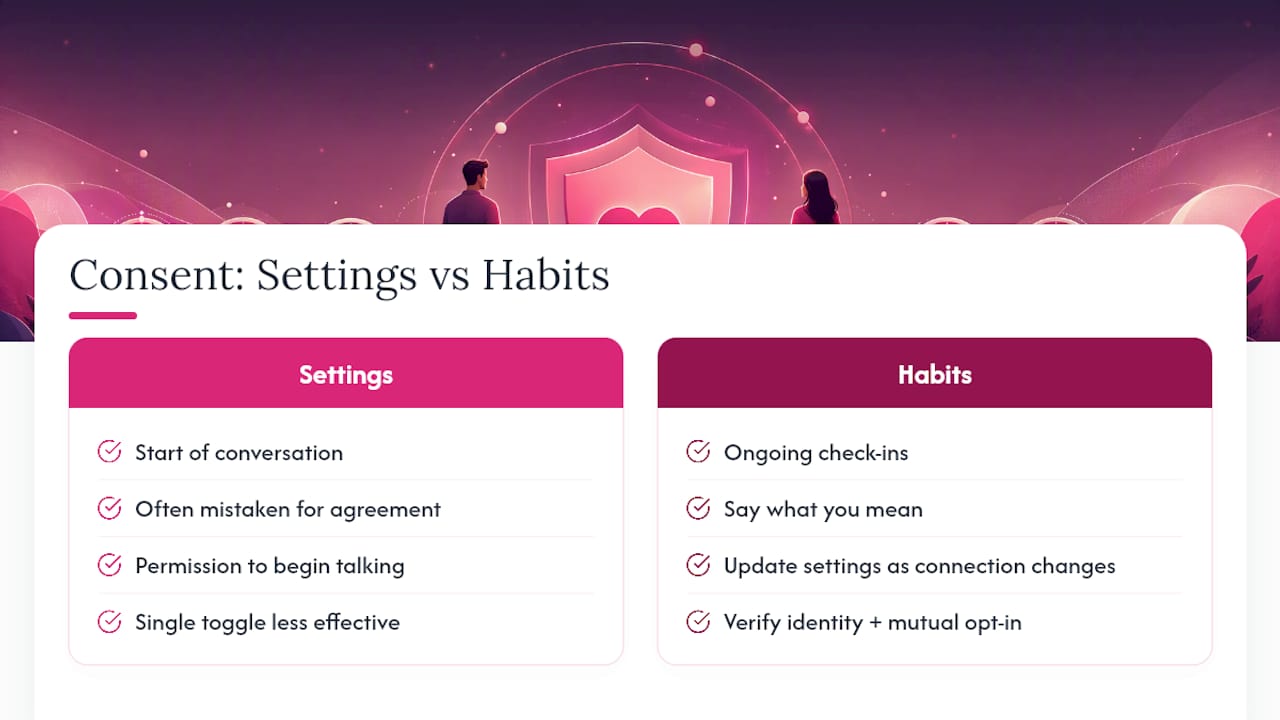
Consent settings on dating apps only work if you treat them as the start of a conversation, not a replacement for one. I’ve seen how easily people confuse a verification badge or a mutual match for a finished agreement. It isn’t. It’s permission to start talking, nothing more.
What actually holds up is the boring, repeatable stuff: checking in, saying what you mean, updating your settings as a connection changes. Prioritize platforms that verify identity and require mutual opt-in before messaging even opens. That combination does more real-world safety work than any single privacy toggle.
— Daniel
Where Can You Find These Consent Settings Already Built In?
Swingersuk is built around the same principle this guide walks through: consent should be a feature, not an afterthought. Every member goes through AI and human-reviewed identity verification before they can be found in search, which filters out fake accounts before they reach your inbox.
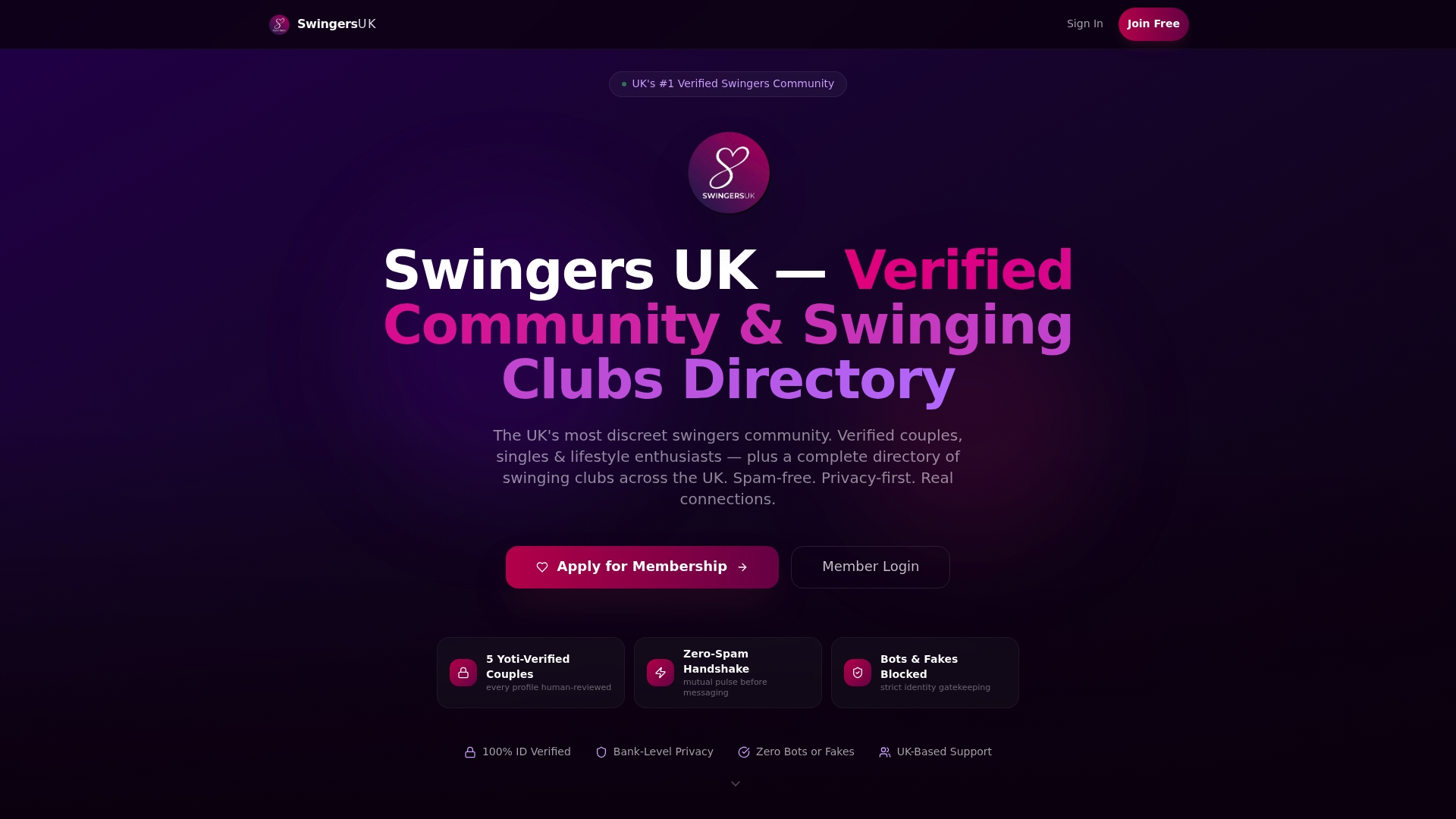
Messaging only opens once both people have expressed interest through the Pulse Handshake System, so you’re never fielding cold messages from someone who hasn’t already signaled mutual interest. Private cam rooms carry their own moderation, and visibility controls let you decide exactly who sees your photos, your location, and your online status. Community rules and moderation standards are laid out plainly in the platform guidelines, so you know what’s enforced before you need it enforced.
If you want a community where verification and mutual opt-in come standard rather than buried in a settings menu, start with Swingersuk and set up your verified profile today.
Sources
- Swipe right to consent: How dating app usage by young adults contributes to sexual objectification and sexual consent miscommunication
- Dating Apps Need to Learn How Consent Works
- Dating app raw exposed users’ location data and personal information
- Consent Check-In - Consent Culture
- Online Dating as Context to Design Sexual Consent