
Message Audit Trails: What UK Moderators Must Keep to Prove Consent
Message Audit Trails: What UK Moderators Must Keep to Prove Consent
An audit trail for messages is a tamper-evident record that links a mutual-interest handshake, the exact consent screen a member saw, and ordered message metadata, so moderators can prove who agreed to what, when, and how. It matters because screenshots alone can be edited, denied, or stripped of context. The minimum viable record needs identity, a timestamp, the policy version shown, and a way to prove none of it was altered after the fact.
TL;DR:
- Message logs must link the initial mutual-interest handshake to subsequent messages with precise timestamps and consent proof, not just store raw chat data.
- Implement append-only records with cryptographic hashes and signatures to detect any post-logging tampering of saved conversations.
- Record the exact policy version and UI shown at consent time, ensuring that the proof of agreement reflects the actual terms the user saw.
- Retain only the information needed to demonstrate valid consent and support legal defenses, updating records whenever policies or workflows change significantly.
- Use verified exports with digital signatures that include all relevant events, timestamps, and policy snapshots to withstand independent review or legal scrutiny.
Table of Contents
- What counts as a message logging system, field by field
- Building a secure message history that survives scrutiny
- How moderators should triage and preserve message evidence
- What UK GDPR and ICO guidance actually require
- Producing a verified export that holds up under review
- Your priority checklist for implementation over the next few months
- Why the trade-offs are worth it
- How SwingersUK approaches consent and audit capability
- Sources
- FAQ
What counts as a message logging system, field by field
A usable audit trail for messages isn’t just “we kept the chat logs.” It’s a structured record where every event carries enough context to stand on its own if someone challenges it months later. Safety teams often discover the gap only after an incident, when they realize their message tracking audit shows that a conversation happened but not how it started or under what terms.
Every event your platform captures should include:
- User and session identifiers — the account ID and session ID, not just a username that could be changed later.
- Event type — handshake sent, handshake accepted, message sent, message deleted, consent withdrawn.
- A high-resolution timestamp — down to the millisecond, because sequence disputes hinge on order, not just the day something happened.
- The handshake or consent event itself — the specific Pulse Handshake record showing mutual interest was confirmed before messaging opened.
- The exact UI or policy version shown — the version of the consent screen or messaging terms the member saw at that moment, not the current version.
- Message IDs and metadata — sender, recipient, length, attachment type, separated from the message content itself.
- Minimal device or IP data — only when genuinely needed for fraud or safety investigations, never as a default collection habit.
The handshake and the messages that follow it need to be linked, not just logged side by side. If your system records a mutual-interest event and then a separate, unconnected stream of messages, you’ve built two logs, not one audit trail. The link is what proves the messaging that followed was consensual from the first exchange. Data minimization means separating metadata from content wherever possible: store that a message was sent and when, without needing to retain the full text longer than policy requires.
Building a secure message history that survives scrutiny
Logging events is the easy part. Making those logs trustworthy under challenge is where most platforms fall short. A secure message history needs to be tamper-evident, meaning any alteration after the fact is detectable, not just theoretically prevented.
The core techniques worth adopting:
- Append-only logs or signed manifests — once an event is written, it cannot be edited in place, only superseded by a new event with its own timestamp.
- Cryptographic hashes or HMACs on exported records, so any modification to a downloaded file changes the hash and exposes tampering.
- Detached signatures for verified exports — a signature file separate from the export itself, so the export can be checked without altering the original.
- UTC timestamps at millisecond resolution — normalizing time zones prevents disputes over “which came first” across users in different regions.
- Write-once consent flags — once a handshake or consent event is recorded, that field is locked, and any change becomes a new, separately timestamped record.
A practical pattern here is an append-only consent ledger: each entry records the session ID, handshake ID, policy version, timestamp, and a cryptographic hash of the associated message set. Export manifests then carry detached signatures proving the manifest itself hasn’t been altered since it was generated.
Pro Tip: Snapshot the exact UI and policy version at the moment of consent, not just a link to “current terms.” Terms change, and a record that points to a moving target is worthless in a dispute six months later.

How moderators should triage and preserve message evidence
When a report lands, the trail only helps if your team knows how to use it. The Crown Prosecution Service’s guidance on communications evidence makes clear that investigators need the full sequence, not an isolated message pulled out of context.
- Verify the chain: confirm the handshake timestamp, the consent version shown, and the full message sequence before drawing any conclusion.
- Seal a verified export: generate the signed record immediately, before any further action risks altering the underlying data.
- Preserve the original untouched: keep the sealed export as the evidentiary original, and work only from redacted copies afterward.
- Log every access: record reviewer ID, timestamp, and purpose each time the sealed record or a redacted copy is opened.
- Escalate with care: loop in legal counsel before sharing anything with law enforcement, and follow disclosure processes rather than ad hoc forwarding.
Practical guidance on messaging evidence from the Safety Net Project recommends capturing whole conversations rather than fragments, since a message pulled out of sequence can misrepresent what actually happened.
Pro Tip: Limit who can read a sensitive export to the smallest group necessary. Every additional viewer is another point where a survivor’s privacy can be compromised, even with good intentions.
What UK GDPR and ICO guidance actually require
The ICO’s guidance on obtaining, recording and managing consent is direct: organizations must be able to show who consented, when, how, and what information they were shown at the time. That last part trips up a lot of platforms, because it requires keeping the actual version of the policy or handshake screen, not just today’s version.
The EDPB’s guidelines on consent add a related principle: the controller carries the burden of proof, and consent records should link directly to the workflow and information presented at that moment. Keep in mind:
- Retain what’s necessary to demonstrate consent and defend against a legal challenge, not everything forever.
- Refresh consent whenever the processing purpose or handshake mechanism changes meaningfully.
- Record withdrawals with the same rigor as the original consent, since withdrawal must be as easy as giving consent.
Producing a verified export that holds up under review
A verified export is the document you hand to a moderator panel, an internal investigation, or a lawful disclosure request. It needs to be complete enough to establish context and sealed tightly enough that nobody can question its authenticity.
- The ordered handshake and consent events, not just the messages that followed.
- The full message timeline with metadata intact.
- A snapshot of the UI or policy version shown at the time.
- Exporter identity and a cryptographic signature or manifest hash.
| Export element | Purpose |
|---|---|
| Handshake/consent record | Proves mutual interest existed before messaging began |
| Message timeline | Shows order and content of the exchange |
| UI/policy snapshot | Confirms what terms the member agreed to |
| Manifest signature | Proves the export hasn’t been altered since creation |
Two formats work well in practice: a PDF carrying a signed manifest for human review, or a JSONL file with a detached signature for automated ingestion by investigators. Treat the sealed export as the original and generate redacted working copies for anyone who doesn’t need the unredacted version.
Your priority checklist for implementation over the next few months
- Enable session-linked, versioned consent records tied to every handshake event, with signed export capability built in.
- Write a retention and disclosure policy consistent with ICO expectations, and set a cadence for refreshing consent when workflows change.
- Train moderators specifically on triage, redaction, and how to generate and handle a verified export.
- Instrument access logs so every view of a sealed record or redacted copy is itself recorded with reviewer ID and purpose.
Within a few weeks you can build the technical foundation, and within a few months your moderation team can become fluent in using it under real pressure.
Why the trade-offs are worth it
Tamper-evident trails give moderators confidence to act decisively instead of guessing, and they give members proof their consent was real and recorded. Storage and engineering cost more this way, and that’s a fair trade-off, not a hidden one. Be upfront with your community about what you log and why. If you want to talk through implementation specifics, reach out.
— Daniel
How SwingersUK approaches consent and audit capability
You’ve just read what a defensible audit trail needs: linked consent, versioned policy snapshots, and tamper-evident exports. Swingersuk is built around exactly that framing, not bolted on as an afterthought. Every profile goes through AI and human identity verification, and no message reaches an inbox until the Pulse Handshake System confirms mutual interest first, which is the consent event your audit trail exists to prove.
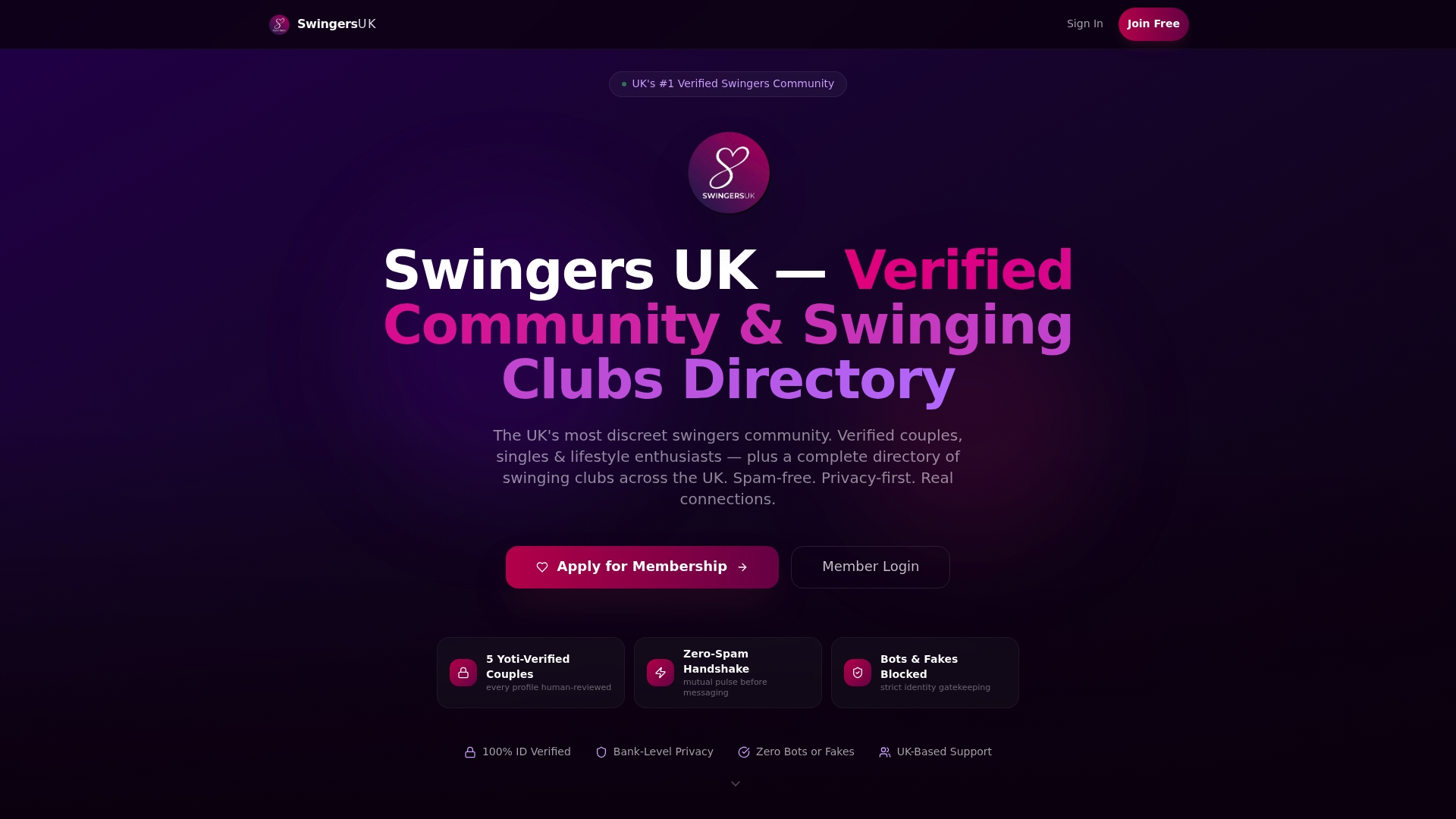
For safety teams and admins, the platform’s activity reporting tools and admin notification system give you a working view into handshake and message events without digging through raw logs by hand. If you’re building out evidence-handling policy for your own team, or you want to see how a verification-first, handshake-based model works in practice, visit Swingersuk and check the admin tools for yourself.
This article is general information, not a substitute for advice from a qualified lawyer. Consult a qualified legal professional about your own circumstances before acting on anything here.
Sources
- How should we obtain, record and manage consent? | ICO
- Disclosure - Guidelines on communications evidence | The Crown Prosecution Service
- Messaging Evidence — Safety Net Project
FAQ
What Should an Audit Trail for Messages Record?
At minimum, it needs user and session identifiers, event timestamps, the handshake or consent event, the exact policy version shown, and message metadata kept separate from content. The ICO’s guidance on recording consent sets this as the baseline for demonstrating valid consent.
How Do You Make a Message Log Tamper-Evident?
Use append-only storage so entries can’t be edited after the fact, apply cryptographic hashes to exported records, and attach detached signatures to verified exports. Any alteration to a signed export changes its hash and immediately flags the tampering.
Why Does Handshake and Message Linkage Matter Legally?
Isolated messages lack context, and the CPS’s guidance on communications evidence notes that investigators need the full sequence to assess what actually happened. Linking the handshake to the messages that follow shows consent existed before the conversation began.
How Long Should Consent Records Be Retained?
Retain only what’s necessary to demonstrate consent and support a legal defense, per EDPB guidance on data minimization. Refresh consent records whenever your handshake workflow or policy terms change materially.
Does SwingersUK Keep Records of Consent and Messaging?
Swingersuk’s Pulse Handshake System requires mutual interest before any messaging begins, and the platform’s admin tools include activity reporting for reviewing these events. Current membership pricing and feature details are available directly on the SwingersUK site.